
Fly-tippers choose farm gateways for three things: a place to stop unseen, time to unload undisturbed, and anonymity. Stop any one of these and the location becomes worthless to them. Gateway denial through locked gates and physical barriers, combined with visible sightlines and motion-triggered lighting, removes the conditions tippers depend on — and costs far less than clearing the waste afterwards.
Why fly-tippers target specific farm entrances
Fly-tipping on private farmland becomes your legal responsibility to clear, which makes prevention at the entrance far cheaper than cure. Tippers operate like any opportunist: they choose locations by risk and convenience. The ideal spot is a wide gateway or lay-by off a quiet lane, screened from the road, with enough space to reverse a van or tipper and no sign that anyone will notice for days.
Every measure that follows works by attacking one of those four conditions: access to the entrance, concealment from view, time to complete the dump, or anonymity. A farm that removes even one of these factors — particularly the quiet space to stop and turn — stops being worth the trip. Tippers rarely walk waste even a short distance from the vehicle, so denied parking means the problem moves to someone else’s gateway.
Physical barriers: the cheapest and most permanent defence
Gateway denial through locked gates and earth obstacles removes the parking space a tipper needs before they even attempt to stop. Locked gates on every unused entrance are the first line of defence. For entrances that cannot be gated, earth bunds, boulders, tree trunks or deep ditches across the pull-in achieve the same result: a vehicle cannot safely stop, reverse or turn.
Farms consistently find that closing just three convenient gateways moves the problem elsewhere entirely. These measures cost little to install and nothing to maintain. A tipper’s van takes up significant space; a blocked entrance offers none of it. The investment in physical denial is usually recovered the first time you avoid a clearance bill.
Sightlines and visibility: turning concealment into exposure
Cutting back hedges around key entrances so they are visible from the road or the farmhouse removes the concealment a tipper relies on most. This is the second-cheapest deterrent after gates and earth obstacles, and requires only hedge trimming work you may already be doing.
A gateway that is exposed to view — whether from passing traffic or your own house — signals risk to an opportunist. The same trimming improves your own night visibility and, if you decide to install cameras later, extends their reach and plate-recognition capability. Visibility alone stops many casual tippers before they pull in.
Motion detection and lighting: active deterrence at the moment it matters
Detection transforms a gateway from passive barrier to active defence. A motion sensor or beam across an entrance that triggers lights — and relays a warning to the farmhouse by radio, independent of mobile signal — interrupts the one thing a tipper needs most: undisturbed minutes to unload. Lights snapping on over a half-unloaded van usually end the visit on the spot.
Solar-powered sensors with radio links can watch a remote entrance without mains power, broadband or mobile coverage. The warning reaches your house instantly by radio signal, allowing you to respond or alert neighbours. This instant local deterrence works because it removes anonymity and the uninterrupted time the tipper depends on.
Evidence capture: how plate-height footage drives prosecution
A camera positioned at plate height on a likely entrance, recording locally to storage on site, gives the local authority the evidence it actually needs: vehicle, registration, date and time. Councils can and do prosecute fly-tippers where registrations are captured. Household waste traced to its origin carries consequences for the household responsible.
Visible cameras and instant lighting deter opportunists; plate-height footage enables prosecution of the rest. The camera must be positioned for registrations at the entrance itself — wide scenic views rarely identify anyone. Local recording means the footage is not lost to signal outages or data limits, and the evidence remains under your control until you hand it to enforcement.
Reporting and district networks: stripping away anonymity
Report every incident, even small ones, to your local authority and — for larger or hazardous dumps — the Environment Agency. Reporting feels futile when you are the one paying for clearance, but enforcement is intelligence-led: patterns of incidents at named locations are what justify council cameras, patrols and prosecutions of repeat offenders. A single report may seem to go nowhere; repeated reports from the same gateway get action.
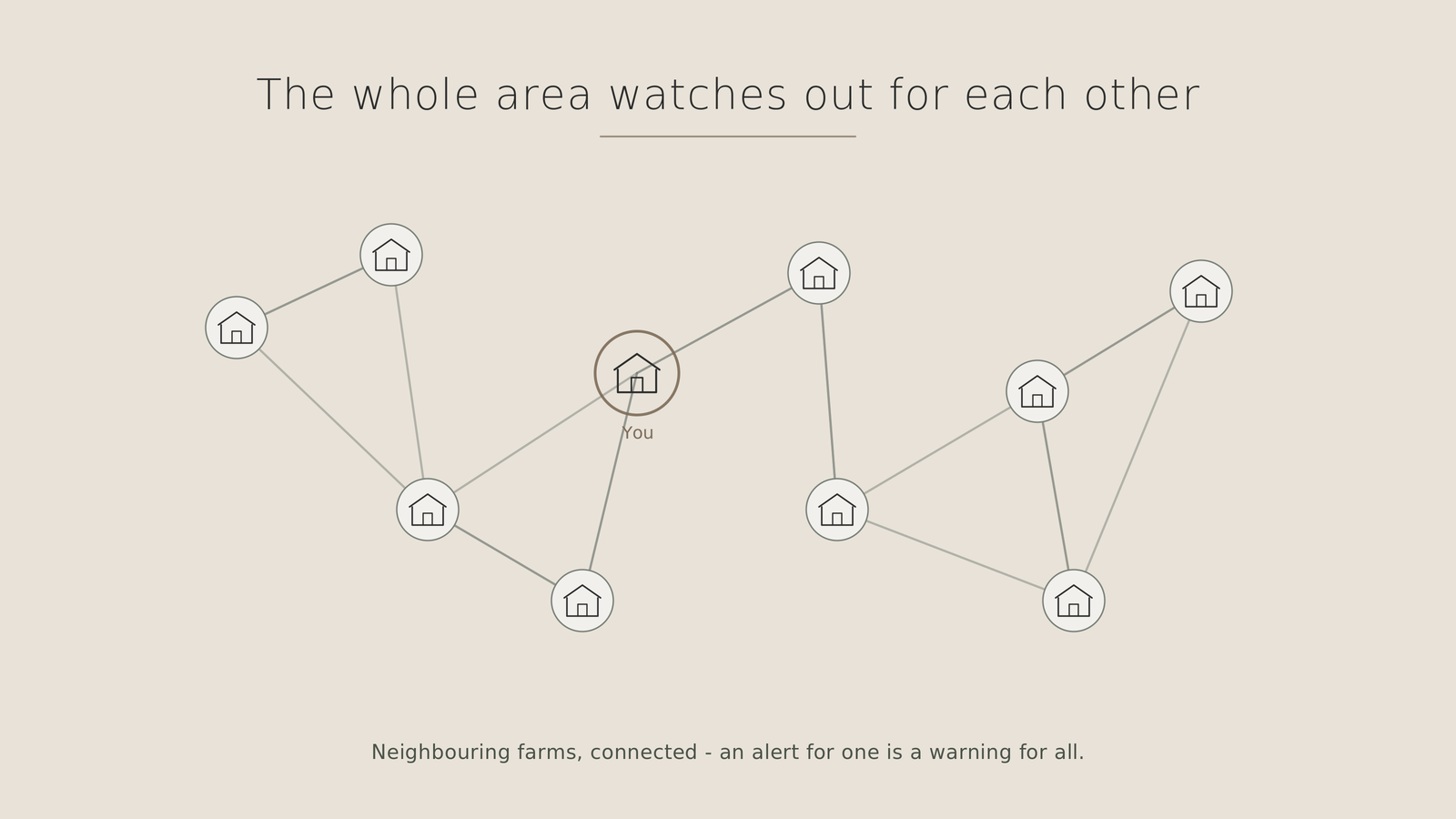
Neighbouring farms multiply the effect. The van that tips in your gateway tonight was seen passing someone else’s yard ten minutes earlier. A farm-to-farm alert network — warnings relayed by radio across a district — means a suspicious vehicle working the lanes gets noticed, described and expected before it finds a quiet spot. Fly-tipping thrives on anonymity; a district that talks strips it away.