
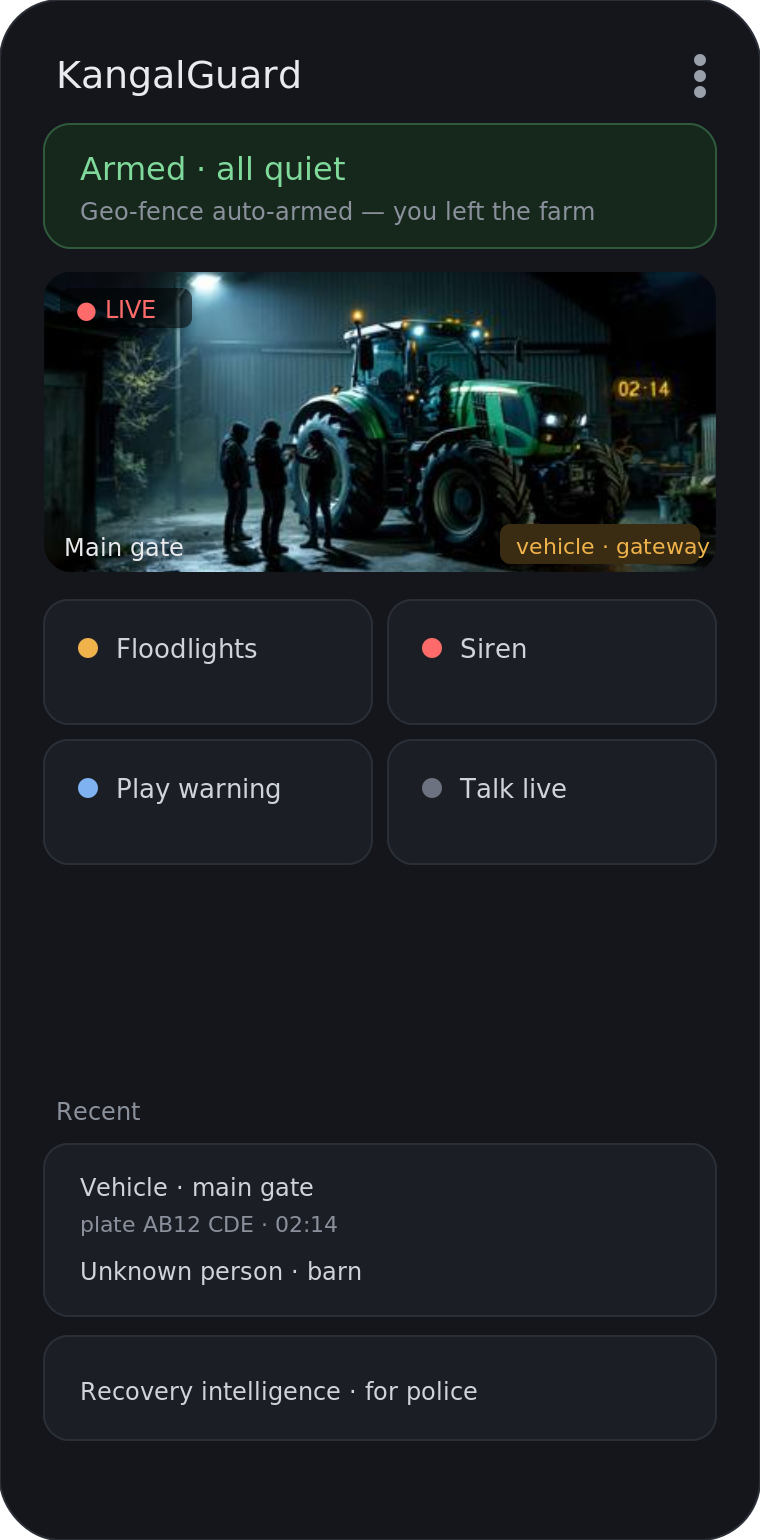
Livestock rustling is organised, mobile and mostly nocturnal—a vehicle, trailer, quiet field and stock gone by morning. Stop it by controlling field access with locked lift-proof gates, knowing your stock cold through current tallies and complete marking, detecting vehicles at gateways before loading starts, and building a district network that relays sightings across farms. Gateway sensors on off-grid systems alert you at 2am when the thief arrives, not at first light when they’ve gone.
Why are fields such different targets from farm yards?
Livestock graze away from buildings, which means rustling is a field-based crime of opportunity, not a yard-breach. A thief needs what any livestock handler needs: hardstanding for a vehicle and trailer, a workable gateway, and stock that can be gathered quietly. Fields backing onto lay-bys and quiet lanes with wide gateways are the classic targets. A professional will scout an area over days, identifying which fields have the access they need and which do not.
Walk your holding with a thief’s eye. Fields with informal pull-ins, weak gates or hedge-side access are invitations. The vulnerable fields identify themselves quickly once you know what you are looking for. This reconnaissance cost nothing and reveals where your security effort must land first.
What is the single most effective physical defence against rustling?
Field access control is the highest-value measure. Heavy-duty locked gates on every field entrance, hinges capped or reversed so gates cannot be lifted off, and obstacles across informal pull-ins force the thief to work in view of the road or not at all. Loading sheep over a hedge is not practical; denying the trailer its parking space defeats most attempts before they start.
Rustling depends on speed and stealth. When a vehicle cannot reach the stock, when loading takes hours instead of minutes, and when every second in the field is visible from the road, professional thieves move elsewhere. This is not about perfect security—it is about making your holding a harder target than the next farm over.
How do stock records and marking make theft less attractive?
Stolen animals that are hard to sell are not stolen. Complete, current tagging and any additional marking appropriate to your system make animals harder to launder into legitimate sales routes. A professional thief knows this. They know that marked stock in a sale ring or through a dealer carries risk; unmarked or poorly recorded stock does not.
Keep tallies current so a loss is noticed in days rather than at gathering. A loss discovered weeks later is a cold incident the police cannot act on. A loss discovered at the gate three days after it happens is a live theft with a chance of recovery. Marking livestock is not sentimental—it is evidence, and evidence is what deters professional crime.
What can gateway detection tell you that sight-lines cannot?
Detection at field gateways extends your senses to land you cannot see from the house. A solar-powered motion sensor watching a key entrance relays warnings by radio with no need for mains power or mobile signal. You get information that a vehicle is at the gate of the far field at two in the morning—information that would otherwise reach you at first light, hours after the trailer left and the stock is already dispersed.
Off-grid gateway sensors are the bridge between knowing your fields and knowing when they are under threat. The alert gives you time and location. What you do with that alert matters as much as receiving it.
What is the correct response to a night-time gateway alert?
Response should be deliberate, not confrontational. Lights and sirens at the gateway itself startle and interrupt. Cameras capture the vehicle and registration. The call goes to the police with a live incident and location, not a morning-after report. Your aim is to break the attempt and evidence it. Confronting organised thieves in a dark field alone is not the plan; making their location loud, lit and recorded is.
This response works because rustlers work at night to avoid witnesses. Remove the darkness and anonymity, and the cost of the attempt rises. Police can respond to a live call with location and vehicle description. They cannot do much with a morning report of missing stock and no details of the thief.
How does a district network multiply your defence?
The district network matters more against rustling than almost any other rural crime, because rustlers work areas over days and weeks. The same vehicle and trailer seen scouting one parish turns up loading in the next. Farms relaying sightings and alerts to one another over radio build the picture the police can act on. A vehicle spotted three times in three parishes in a week is a pattern. A single farm seeing it once is a coincidence.
A district known to talk is a district professionals learn to avoid. They move to areas where farms do not communicate, where a single theft goes unnoticed for weeks, and where the police have no pattern to work from. Investment in a farm radio network pays dividends across every member farm. It is low-cost, off-grid, and it turns individual sightings into actionable intelligence.
Which elements should every livestock holding have in place first?
Start with the access and record-keeping groundwork before any electronic system. Walk your holding, identify vulnerable fields, and plan your gate strategy. Lock every field entrance, cap or reverse hinges, and block informal pull-ins. Check your stock regularly and keep current tallies. Complete your marking and ensure tagging is up to date. These are the foundations. A thief turned away by a locked gate needs no camera to catch.
Once access control and records are solid, add detection and response. Gateway sensors on off-grid systems let you know when a vehicle arrives, and lights and cameras give you the evidence and deterrent that makes rustling here too risky. The perimeter-first approach—securing the gate before securing everything behind it—applies to grazing land as much as it does to yards. Build your defences from the outside in.