
Quad bikes, compact tractors and high-value tools are stolen because they’re easy to spot, easy to move and easy to sell. Prevention works by stacking small frictions — each one adds seconds, noise and risk, until the raid becomes too costly to attempt. The most effective farms combine visible deterrence with covert tracking, locked storage in layers, and a neighbour network that gives warning before the thieves even arrive.
Why farm machinery theft is rarely random: what thieves actually look for
Machinery raids begin with scouting, not spontaneity. A thief spots a quad or compact tractor from the road, or notes it during a daytime visit — a delivery, a viewing, a cold caller — and returns later with a vehicle and tools. The scout phase typically happens in plain sight. Your job is to deny them the scout itself: keep quads and valuable kit out of sight of the road, challenge unexpected visitors politely, and treat any caller unusually interested in your buildings and equipment as information worth sharing with your neighbours.
Predictability amplifies the risk. Farms that leave machines in the same spot, in the same visible condition, on the same night of the week become easier targets. Thieves work an area methodically, hitting multiple yards in one operation. A single raid that succeeds is often followed by returns to the same neighbourhood within hours or days. The first line of defence is not locking — it’s staying off the mental map of someone scouting at all.
Layered storage: why each locked gate, building and anchor adds irreplaceable time
A single lock is seconds. An angle grinder defeats a padlock in the time it takes to cut a line, and the noise matters less if no one hears it. Storage that works uses layers because each layer is time the thief must spend, and enough time breaks the raid. A locked yard gate leads to a locked building, which leads to a ground anchor and chain through the quad’s frame, which leads to removed keys stored away from the machine. Four obstacles the raider must defeat in darkness, each adding minutes and audible work.
Quads deserve particular obstinacy. Even inside a locked barn, chain the quad to a ground anchor. The locked barn door alone is seconds to an angle grinder, and the barn muffles the sound of cutting. If the bike is chained inside, the thief must defeat the lock, reach the anchor, cut through the chain, load the quad, and leave — all while a piece of the machine is visibly secured to something fixed in the ground. At that point, most raids abort.
Compact tractors follow the same principle. Larger machines are often taken to order, but precautions matter equally: locked gates, locked storage areas, and immobilisation devices on anything that must live outside. The goal is to make the machine take longer to steal than the thief is willing to spend.
Immobilisation and key discipline: the zero-cost defences that stop the fastest raids
Machines left keyed-up in open yards are gone in the time it takes to open a gate. Immobilisation and key control defeat the fastest, most common raids without a single pound spent. Remove keys every time. Store them away from the machine and away from obvious hooks by the door — not on a pegboard in the workshop, not in the ignition, not in a predictable drawer. Use built-in immobilisers where the machine has them. Fit wheel clamps or hitch locks on anything that must live outside. A quad without keys, with its immobiliser armed and a chain through the frame, is no longer a raid target.
This discipline is the cheapest theft prevention a farm can buy, and it is also the most commonly neglected. Farms that lose machines fastest are usually the ones where keys stay in machines, in obvious places, or where discipline lapses on particular days. Consistency matters: every time you finish with a machine, every time, remove and secure the key.
Marking and recording: how identification turns recovered machinery back into your property
A stolen quad without a mark is a recovered quad that may never come home. Marking works on two fronts. Overt marking — your postcode painted or engraved on a visible surface — makes machinery harder to sell on. Thieves prefer unmarked machines; a marked quad signals a risky sale. Covert marking — a hidden forensic mark, a secret registration number — ensures that if the police recover the machine, you can prove it is yours. Without both, recovered machinery routinely stays in police or auction storage because nobody can prove ownership.
Photograph every machine before it works alone. Record serial numbers and chassis numbers. Register what can be registered. Keep these records where you can find them quickly if needed: a list in your phone, a file backed up online, a printed sheet in a secure drawer. This documentation is the difference between a recovery that brings the machine home and a recovery that leaves it unclaimed.
Hidden trackers: converting a completed theft into a live recovery operation
A GPS tracker is one of the few defences that still works after everything else has failed. If the quad is stolen despite layered storage, immobilisation and marking, a hidden, covertly fitted tracker converts the worst case into a live pursuit with a location feed for the police. Fit trackers where they are not obvious: inside a panel, under a mudguard, in a location the thief will not think to look or disable.
Trackers only work if the subscription is active and if you actually test them. A tracker nobody checked is a subscription, not a defence. Log into the tracking app monthly, verify the location is reporting correctly, and confirm you can read the interface under pressure. When a machine is stolen, a working tracker and a quick call to police can mean recovery within hours, before the machine is dismantled or moved to auction. For anything that moves fast and sells fast — quads and compact tractors especially — trackers earn their keep.
Perimeter detection and the neighbour network: early warning at the boundary
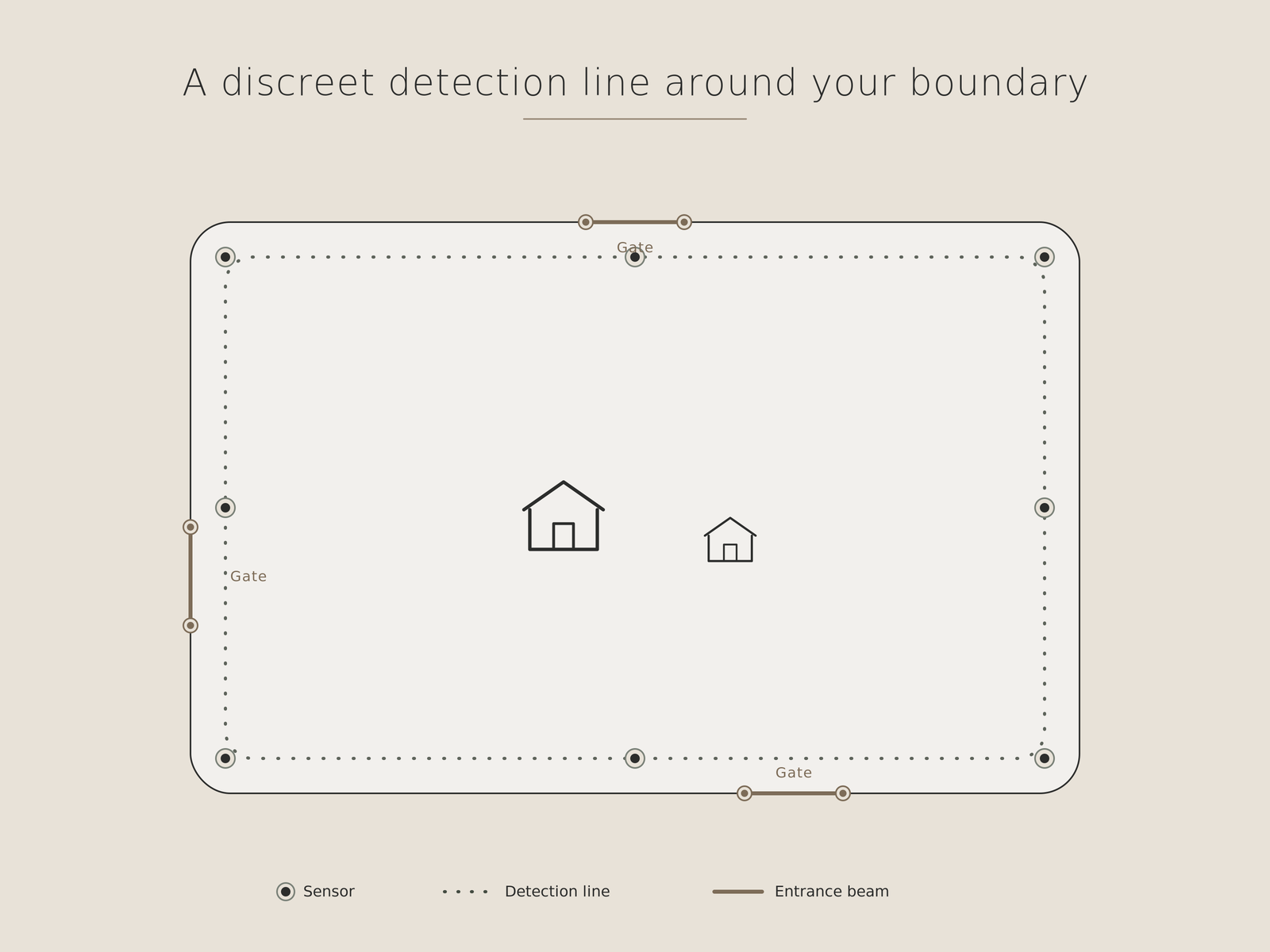
Perimeter detection puts the response before the loss. Motion sensors and beam sensors at gateways and yard approaches, rigged to trigger lights and sirens at the point of intrusion and to relay warnings to the farmhouse by radio, mean the raid announces itself at the boundary while the machinery is still chained, still anchored, still yours. The thief is now in bright light, audible sirens are going off, and the likelihood of abort is high. Off-grid operation matters here: thieves favour yards where the signal dies and where silent, invisible detection is impossible.
The neighbour network completes the picture. Machinery raids work an area: the crew that empties one yard checks three more the same night. Farms relaying warnings to one another over radio — a strange vehicle spotted, a hit on a neighbouring holding, a description of the van — give every holding minutes of notice and give the police a moving picture instead of a morning-after report. Agreement between neighbours to share alerts is the single cheapest early-warning system available.