
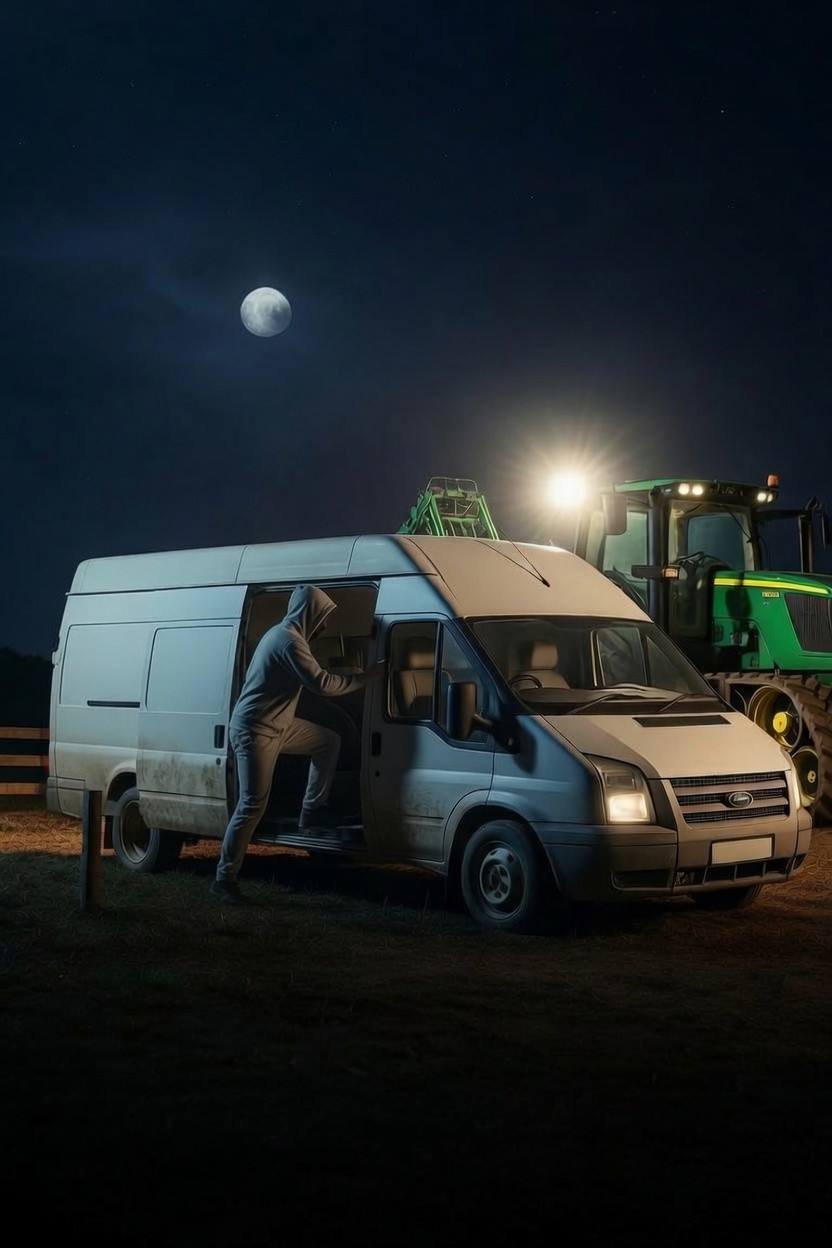
FARM AND RURAL SECURITY
GSM and 4G cellular alarms keep remote farms secure without mains or broadband
GSM and 4G cellular alarms use mobile networks to send alerts directly to you and monitoring centres, working reliably on farms and rural properties where mains power is unreliable and broadband is absent or patchy. They operate independently of landlines and internet, triggering instant notifications when motion, intrusion or environmental triggers activate.
Rural properties face a fundamental infrastructure problem that urban security systems ignore: the absence of dependable mains electricity and the rarity of consistent broadband coverage. Traditional alarm systems rely on landline connections or fixed internet links. On isolated farms, both may be absent, intermittent or prohibitively expensive to maintain. GSM and 4G cellular alarms solve this by embedding a mobile SIM card directly into the alarm panel, using the same networks that smartphones use. The result is a security system that operates independently of any other utility, communicating silently via the cellular network whenever an event occurs.
A GSM alarm works by monitoring entry points, motion sensors and environmental triggers—door contacts, window sensors, passive infrared detectors, water ingress alarms, temperature probes. When any sensor is triggered, the alarm panel uses its embedded SIM to send a signal across the mobile network to a monitoring centre or directly to the property owner’s phone. No landline. No router. No internet gateway. The message passes through the same 2G, 3G, 4G or 5G infrastructure that covers most of rural Britain, making cellular alarms far more reliable on farms than solutions dependent on domestic broadband or dial-up connections.
The technical robustness of GSM and 4G systems lies in their simplicity and redundancy. A modern 4G alarm panel can fall back to 3G or 2G if 4G signal weakens, ensuring continuous operation across changing coverage conditions. Many panels include a secondary backup—a second SIM card from a different network operator—so that if one provider’s signal fails at your location, the alarm switches automatically to the second. This dual-SIM redundancy is particularly valuable on farms where a single network operator may have weaker coverage than another. The system does not compete with other household traffic for bandwidth; it uses only the small data packets needed to send alerts, making it unaffected by the presence or absence of other mobile users on the same mast.
Installation on farm properties differs from urban settings because rural electricians and security engineers must account for longer cable runs, external sensor placement exposed to weather, and the challenge of positioning the alarm panel where it can receive consistent signal. The GSM panel itself is typically housed in a secure cabinet indoors—a utility room, office or outbuilding—positioned to avoid RF shadowing from metal structures or heavy stone walls common in older farm buildings. Outdoor sensors—perimeter detectors, gate contacts, livestock enclosure monitors—run hardwired back to the panel using armoured cable or, increasingly, wireless mesh sensors that relay signals back to the main unit without requiring trenched cabling. A professional installer will survey signal strength at your site before commissioning, ensuring the panel has adequate bars before you rely on it.
The user experience of a GSM cellular alarm is straightforward once configured. When armed, the system monitors continuously. On trigger, the panel dials the monitoring centre or sends an SMS and push notification to nominated contacts within seconds. Many modern panels include a web portal and mobile app, allowing you to view system status, receive alerts and even disarm remotely if needed—though on a farm with poor broadband, the app functions via the cellular connection, not your home Wi-Fi. The panel itself usually has a keypad or touchscreen for local control, and many support PIN codes and wireless key fobs for arming and disarming without entering the building. This is valuable for farmers who may secure a barn or field gate remotely.
Monitoring centre integration is the standard for farm GSM systems. Instead of relying solely on notifications to your phone—which you might miss if you’re in a field, on a tractor or simply overwhelmed during an incident—a 24/7 monitoring centre receives the alarm signal in parallel. They can verify the trigger, contact you, alert local police if necessary, or dispatch a response team. This professional layer is especially important for livestock theft, unauthorised access to grain stores, or fuel tank theft, where rapid verification and police attendance can recover losses. Many rural security specialists offer monitoring as part of their service, with contracts typically running month-to-month or annually.
Reliability of GSM coverage across the UK varies significantly, and farms in genuinely remote areas may find certain operators more dependable than others. Before investing in a GSM alarm, a site survey is essential. Professional installers carry signal-strength meters and can test all major networks at your location, identifying which operator offers the strongest, most stable coverage. Some farms sit in notches where one network reaches clearly whilst others do not; dual-SIM systems account for this. If coverage is marginal even after surveying, a hybrid approach—combining GSM with a secondary wired connection to an internet gateway if broadband exists elsewhere on the property—can improve reliability. However, for true remote farms, GSM remains the only practical alarm communication method.
Costs and running expenses for GSM cellular alarms are modest compared to the security value they provide. There is no landline contract to maintain. The SIM cards cost a few pounds per month, often bundled as part of a monitoring contract. If you choose self-monitoring (alerts to your phone only, no professional centre), the SIM cost is minimal. Many rural businesses find that preventing a single incident—livestock theft, theft from a barn or unauthorized removal of equipment—pays for years of GSM alarm monitoring. The system requires little maintenance beyond occasional testing of sensors and battery checks on wireless devices. Most panels include a backup battery that keeps the GSM unit operational for 24 hours if mains power is lost, though farms with renewable power systems often run the alarm from a dedicated small UPS or solar-backed battery.
Choosing a GSM cellular alarm for a farm is ultimately a decision about accepting the reality of rural infrastructure. Where broadband is absent, patchy or costly, where mains electricity is unreliable, and where distances to police are large, a mobile-network-dependent security system aligns with how the rest of rural Britain operates. Farmers already rely on mobile phones, mobile data and mobile hotspots. A GSM alarm simply extends that dependency to physical security, using the same proven infrastructure. Professional rural security engineers understand this landscape and size systems accordingly—selecting equipment rated for outdoor use, planning installations that maximise signal reception, and configuring monitoring that actually works from 20 miles away.
Explore KangalGuard by security system
Related security systems
Frequently asked
Will a GSM alarm work on my farm if I have no broadband?
Yes. GSM and 4G alarms use mobile networks, not broadband. They work on any farm with mobile phone signal, regardless of internet access.
What happens if my farm loses mains power?
The alarm panel includes a backup battery, typically lasting 24 hours on battery alone. The GSM module continues transmitting alerts during a power cut.
How fast does a GSM alarm alert the monitoring centre?
Most systems send alerts within 10–30 seconds of a trigger. SMS and push notifications arrive simultaneously or within seconds thereafter.
Can I use a GSM alarm if signal is weak at my location?
A site survey will identify which networks offer best coverage. Dual-SIM systems automatically switch to a second operator if the primary network signal is weak, improving reliability.
Do I need a monitoring contract or can I just get alerts on my phone?
Both options exist. Self-monitoring sends alerts directly to your phone and nominated contacts. Professional 24/7 monitoring adds a response layer. Choose based on your needs and budget.
Ten things YOU can do this week to make YOUR farm a harder target.
The Defence Kit is free, costs nothing to act on and needs nothing installed. Every one of the ten comes from a working Essex farm that was hit and from what the farms on the watch network report week by week. Take the ten steps first. If YOU still want cameras and a tripwire on YOUR gateways after that, we will come and walk the yard with YOU before YOU spend a penny.
Get the free Defence Kit