
FARM & RURAL SECURITY
GPS trackers that keep your farm machinery where you left it
GPS trackers for quads, tractors and farm machinery deliver real-time location monitoring and theft deterrence across your operation. We install purpose-built systems designed for rural conditions—hardened against weather, dust and vibration—with live alerts when equipment moves outside designated zones or operating hours.
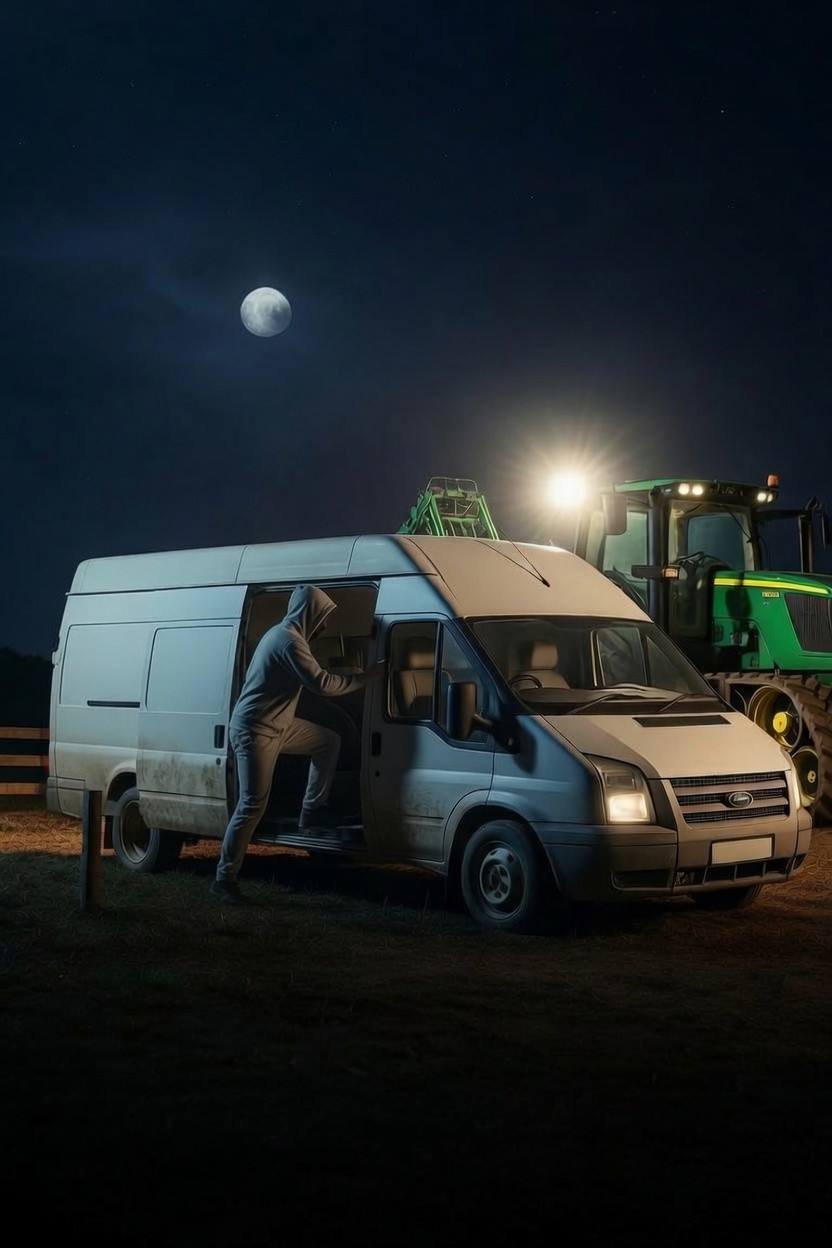
Farm machinery represents substantial capital investment. A single modern tractor or quad bike can cost tens of thousands of pounds, and theft of agricultural equipment remains a consistent problem across rural Britain. GPS tracking systems address this risk directly by providing continuous asset visibility. Unlike passive security measures, active trackers emit real-time location data to a secure portal accessible from any device. When a tractor or quad is moved without authorisation, or when equipment leaves a defined perimeter, the system generates immediate alerts to your phone or email. This combination of continuous monitoring and instant notification changes the economics of theft—a thief cannot work undetected, and law enforcement gains accurate, time-stamped location data if recovery becomes necessary.
The systems we install are engineered specifically for agricultural environments. Farm machinery operates in conditions that would disable consumer-grade trackers: prolonged vibration from rough ground, exposure to dust and fertiliser spray, mud ingress, and temperature extremes. Purpose-built agricultural GPS units house their electronics in sealed, reinforced enclosures, mount securely to chassis or engine blocks, and draw power directly from the vehicle’s electrical system. Data transmission uses multiple networks—cellular, satellite backup, and sometimes LoRaWAN depending on your location and coverage—to ensure the tracker remains connected even in remote fields where standard mobile signal is weak or absent. The installation itself is clean and permanent: brackets are welded or bolted to load-bearing points, cabling is routed through existing harnesses, and the unit integrates with your machinery’s power supply so it operates autonomously without battery anxiety.
A working tracker needs a backend. We provision each system with a dedicated web portal where you log in to view live equipment positions on a map, review movement history, set geofence boundaries, and manage alert rules. The interface is intentionally straightforward—no unnecessary complexity—because the user is a farmer or manager, not a software engineer. You can define multiple zones: the home yard, a leased block five miles away, a contractor’s site. If equipment enters or leaves any zone outside your preset times, you receive an alert. You can also set ‘silent hours’ during contracted hire periods so legitimate movement doesn’t trigger false alarms. Historical playback allows you to review exactly where a tractor worked on any given day—useful for machinery maintenance records, contractual disputes, or audit trails if an incident occurs.
Installation and setup timing matter. We schedule tracker fitting at a point in your calendar that minimises disruption: often during scheduled maintenance, between seasons, or during periods when specific vehicles are less critical to daily operation. The physical work takes two to three hours per unit depending on machinery type and the condition of the vehicle. Our technician confirms the installation is complete by testing live position transmission and verifying alerts function correctly before leaving site. You then receive login credentials and a brief walkthrough of the portal via phone or video call. Most users are comfortable navigating the system within a single session; the learning curve is deliberately shallow because reliability matters more than feature richness.
Theft patterns in rural areas follow predictable routes. Quad bikes and smaller equipment are transported by trailer along minor roads in darkness; larger machinery like headers or balers are moved between farms or to dealers during seasonal windows. GPS data often reveals these patterns within weeks of installation. More importantly, the simple fact of visible tracking—a small weathered device bolted to the frame—acts as a deterrent. Professional thieves research their targets; a tracker is visible evidence of active monitoring and makes the asset harder to fence. Insurance companies also recognise this: some policies offer premium reductions when machinery carries active GPS, because theft claims decline materially. That saving can offset the cost of the system within eighteen months.
Battery and power reliability are non-negotiable in a working tracker. Our systems draw constant trickle current from your machinery’s main electrical system, not from an internal battery. This means the device operates continuously as long as your tractor or quad is roadworthy. There is no daily charging, no dead battery after equipment sits idle for a month, no missed alerts because a battery depleted over winter. The data connection uses cellular networks as primary, with satellite fallback on units rated for remote moorland or off-grid use. In rare cases of complete network failure—a mobile mast outage, or remote areas without any coverage—the tracker stores location points internally and uploads them once connectivity returns. This hybrid approach ensures no blind spots in your monitoring, even in genuinely remote locations.
Compliance and data security form the framework. All tracker data is encrypted in transit and at rest. The portal operates over HTTPS with multi-factor authentication available. Access controls let you assign login permissions to multiple users—a farm manager, a machinery operator, an insurance broker—without sharing passwords. The system complies with UK data protection requirements; your location data is yours, retained only as long as you require it, and is not sold, shared or used for secondary purposes. When you remove a tracker from your fleet, you can export historical data for your records and the device can be wiped and reassigned. This transparency matters, particularly if your machinery is financed or leased; lenders and lessors expect clear governance of monitoring data.
Maintenance and fault-finding become clearer with GPS data. If a tractor develops a mechanical problem during fieldwork, the GPS record pinpoints exactly where the breakdown occurred, which simplifies recovery logistics. You can also correlate movement patterns with maintenance schedules: if a machine is regularly operating outside designed parameters—working excessive hours in a single day, or travelling at unusual speeds—that signals a problem worth investigating before catastrophic failure occurs. Some operators use GPS playback data to identify whether contractor-hired machinery returned to the yard in the condition it left, settling disputes about damage or misuse. The tracker becomes an objective record rather than relying on witness testimony or assumptions.
The decision to install GPS trackers on farm machinery is fundamentally a risk-management choice. Theft is one concern; loss of expensive equipment to breakdown in remote fields is another; tracking movements for insurance and operational records is a third. The system addresses all three. The cost is modest relative to the value of the assets being protected—a single stolen quad bike recovers the five years of tracker subscription within a week—and the system integrates simply into your existing operational routine. We handle the technical aspects: assessment of your fleet, selection of appropriate hardware for each machine type, installation to professional standards, and training in use of the monitoring platform. From that point forward, the tracker runs silently in the background, sending alerts only when something requires your attention, and providing visibility that would otherwise be impossible once your machinery leaves the yard.
Explore KangalGuard by security system
Related security systems
Frequently asked
How quickly can you install GPS trackers on our machinery?
Installation typically takes two to three hours per unit and can be scheduled during maintenance windows or between seasons to minimise operational disruption. We test live transmission and alert function before leaving site.
What happens if our machinery goes into an area with no mobile signal?
The tracker stores location points internally and uploads them once connectivity returns. For permanently remote areas, we can provision satellite backup connectivity so you maintain monitoring even where cellular coverage fails.
Can we monitor multiple machines from one login, and can we share access with our insurance broker?
Yes. The portal supports unlimited machines under a single account with customisable access permissions. You can grant login credentials to managers, operators, insurers or other stakeholders without sharing your main password.
Will GPS tracking reduce our insurance premiums?
Many insurers offer premium reductions for actively tracked machinery because theft claims decline measurably. Check with your broker; some policies explicitly incentivise GPS monitoring and may offset system costs.
How do we know the tracker is still working if our machinery never leaves the yard?
The portal displays real-time signal status and last-known position for every unit. You receive test alerts when you configure geofence zones. If you need manual confirmation, we can remotely ping any tracker to verify live transmission within seconds.
Ten things YOU can do this week to make YOUR farm a harder target.
The Defence Kit is free, costs nothing to act on and needs nothing installed. Every one of the ten comes from a working Essex farm that was hit and from what the farms on the watch network report week by week. Take the ten steps first. If YOU still want cameras and a tripwire on YOUR gateways after that, we will come and walk the yard with YOU before YOU spend a penny.
Get the free Defence Kit