
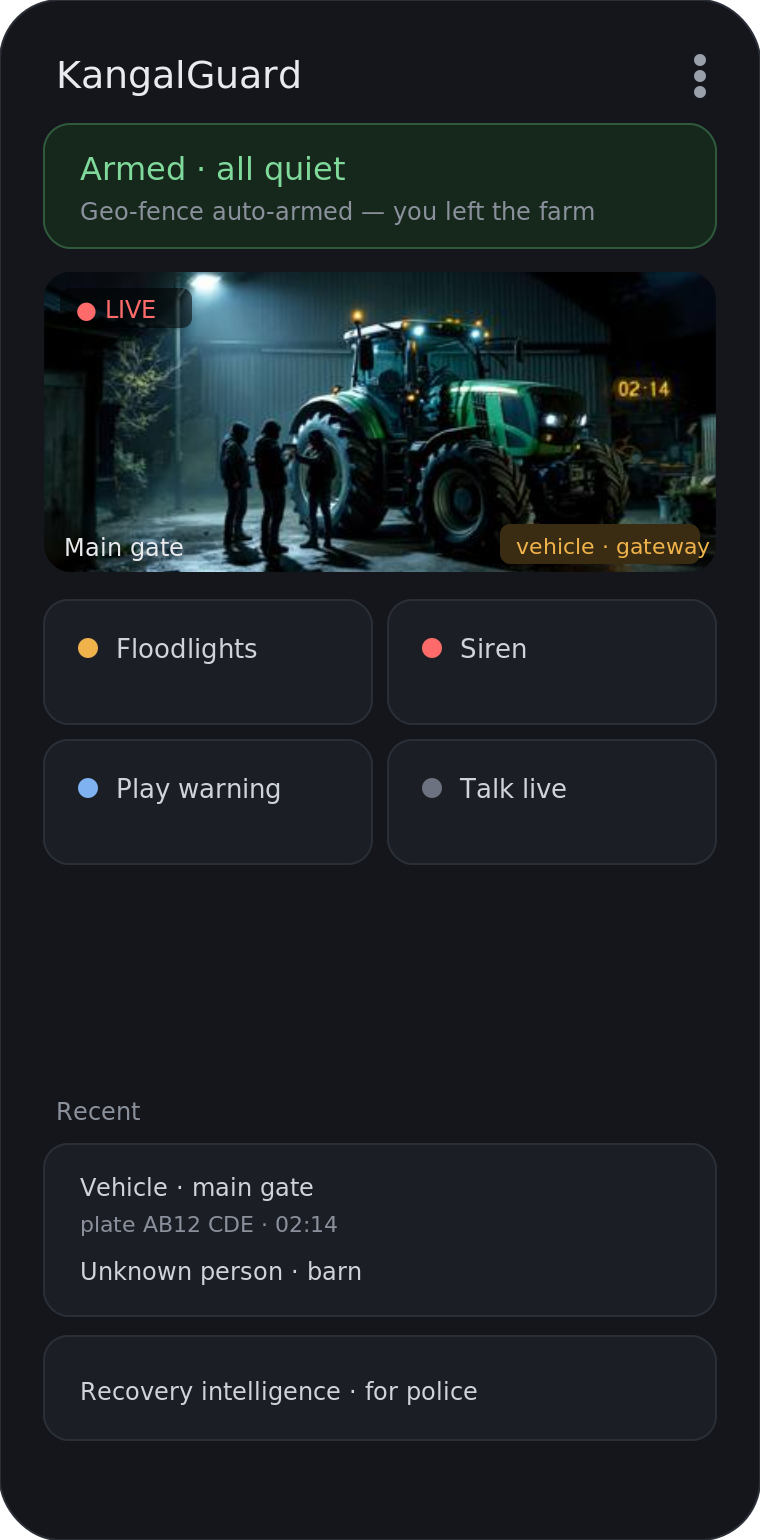
The best 4K CCTV system for UK farms combines high resolution (3840 × 2160 pixels) with reliable network infrastructure, weatherproof design, and sufficient local or cloud storage to handle continuous recording across large perimeters. Resolution alone does not determine system quality; stable power supply, robust cabling, and maintenance access matter as much as camera specification.
Why 4K resolution alone doesn’t guarantee effective rural security
4K delivers four times the pixel density of 1080p, which allows you to identify detail in wide-area footage — a critical advantage on farms where cameras cover livestock enclosures, equipment yards, or boundaries from distance. However, rural properties face challenges that make resolution secondary: intermittent power supply, poor or unstable internet, and exposed cable runs that degrade signal quality. A 4K camera over a failing network or powered by an unreliable supply will perform worse than a robust 1080p system.
The real measure of 4K effectiveness in rural settings is whether your infrastructure can sustain it. Farm buildings often lack the mains stability or network bandwidth that suburban properties assume. Before selecting a 4K camera, audit your site’s power resilience (UPS backup, solar charging capability) and internet capacity (upload speed for live viewing or cloud recording). If those foundations are weak, 4K becomes a liability rather than an asset.
What specifications matter most beyond pixel count
Storage is the first constraint. A 4K camera generates roughly 1.5–2 GB per hour at moderate compression. A farm with four perimeter cameras recording continuously will fill a 2 TB local drive in 3–5 days. Rural properties often lack reliable broadband for cloud backup, so you need either very large on-site storage (NAS or hybrid drive systems), a practical retention window (14–21 days rather than months), or a tiered approach: 4K recorded locally for two weeks, then rolled to lower resolution or deleted. Plan storage explicitly with your installer; it is the difference between a usable system and one that loops over your evidence.
Weatherproofing and lens quality shape daily usability more than megapixels do. An IP67-rated or IP68-rated housing survives UK rain and temperature swings. A varifocal lens (4–8 mm or 2.7–13.5 mm) lets you zoom in on distant activity — essential for monitoring far boundaries or livestock from a single camera angle. Infrared capability (850 nm or 940 nm wavelength) reveals night-time movement without visible light that may disturb animals or alert intruders. These features cost more than the camera sensor itself, but they are what determine whether your system is watched or ignored.
How to assess your farm’s power and network readiness
4K systems demand consistent power. A single camera and recorder may draw 30–50 W continuously; add four cameras, a NAS drive, and network switches, and you approach 150–200 W. Rural properties often rely on mains supply that fluctuates with grid load or weather. An uninterruptible power supply (UPS) rated for 8–12 hours of autonomy is standard practice; farms in areas prone to outages may opt for solar-backed battery systems. Ask your installer for a power audit: they will measure your existing load and recommend UPS capacity. Do not skip this; power failure is the leading reason rural CCTV systems stop recording undetected.
Network stability matters equally. 4K video over WiFi is unreliable; use hardwired Ethernet where possible. If site distances make cabling impractical, consider a dedicated 5 GHz mesh network or a long-range wireless bridge rather than consumer WiFi. Broadband upload speed (the critical metric for live viewing or cloud backup) is often 10–20 Mbps on rural connections; a four-camera 4K system requires 12–16 Mbps upload to stream or record simultaneously. Contact your broadband provider for a speed test report; if upload is below 8 Mbps, prioritise local recording and periodic USB or external drive export over cloud reliance.
Which 4K camera types suit different farm zones
Turret or dome cameras (4–6 inch housing) are most common for farm perimeters because they are robust, support varifocal lenses, and tolerate mounting on posts or building corners without creating wind resistance. Bullet cameras (smaller, streamlined) are popular for building eaves or gateways where aesthetics or space is tight. PTZ (pan-tilt-zoom) cameras in 4K exist but are expensive and require power-heavy motors; they suit high-value zones (equipment yards, feed stores) rather than passive perimeter watch. Fisheye cameras (360-degree view, single unit) reduce the number of cameras needed but sacrifice fine detail and require powerful processing to de-warp footage for search. For most farms, a mix of fixed turrets and one or two varifocals on key entry points is cost-effective.
Choosing between PoE (Power over Ethernet — one cable per camera) and separate power/data is a practical decision. PoE simplifies cabling on new installations but requires a PoE-capable switch; if your network infrastructure is weak, separate power lines may be more reliable. Ask your installer whether they recommend upgrading your network switch or running dedicated circuits. Some farms use solar-powered cameras (battery-backed, wireless transmission) for boundary zones where cable runs are impractical, though these are slower to respond to alerts and require quarterly maintenance.
Storage, retention and evidence management for continuous recording
A 4K farm system must answer: “How long do I need footage stored, and where?” Local NAS drives (network-attached storage) are fast and don’t depend on broadband, but they are vulnerable to theft or fire. Cloud storage (AWS, Microsoft Azure, or specialist CCTV platforms) is geographically protected but requires consistent upload bandwidth and ongoing subscription cost. Most farms adopt hybrid: 14–21 days of 4K on a local NAS encrypted and physically secured (e.g., in a locked cabinet in the farm office), plus weekly exports of key incidents to a cloud archive. This balances quick access with off-site safety.
Retention planning is critical. Deleting footage after 21 days may seem wasteful, but storing six months of 4K on local drives is impractical and expensive. Define your retention rules with your installer before deployment: continuous recording with 14-day local retention; event-triggered (motion or alarm) recording with 60-day retention; or a tiered approach (4K for 7 days, downscaled to 1080p for 30 days). Clarify also who owns the system and how you will search and retrieve footage. A well-documented system with clear retention windows and export procedures is far more useful than unlimited storage that no one knows how to navigate.
What to ask an installer before committing to 4K
A credible rural security installer will conduct a site survey, not just a phone quote. Expect them to inspect your mains supply, network cabling, and intended camera placements, then provide a written assessment: power load and UPS recommendation, network upgrade scope if needed, number and type of cameras, storage plan, and installation timeline. They should also explain the maintenance schedule (cleaning lenses, checking weatherproofing, replacing drives) and provide remote support for troubleshooting. Ask whether they offer a trial period (e.g., 30 days to verify the system meets your needs before final payment) and what happens if performance falls short.
Clarify also whether they integrate with your existing farm infrastructure: gate openers, alarm systems, or livestock monitoring. A standalone 4K system is simpler to deploy but less powerful than one that triggers alerts when motion is detected at specific hours or zones. Request a walk-through of the user interface (how you will view live video, search recordings, receive notifications) before installation. Poor usability is a common reason rural systems are underused. The best 4K system is the one your team will actually watch and maintain; choose an installer who prioritises clarity and ease over feature count.