
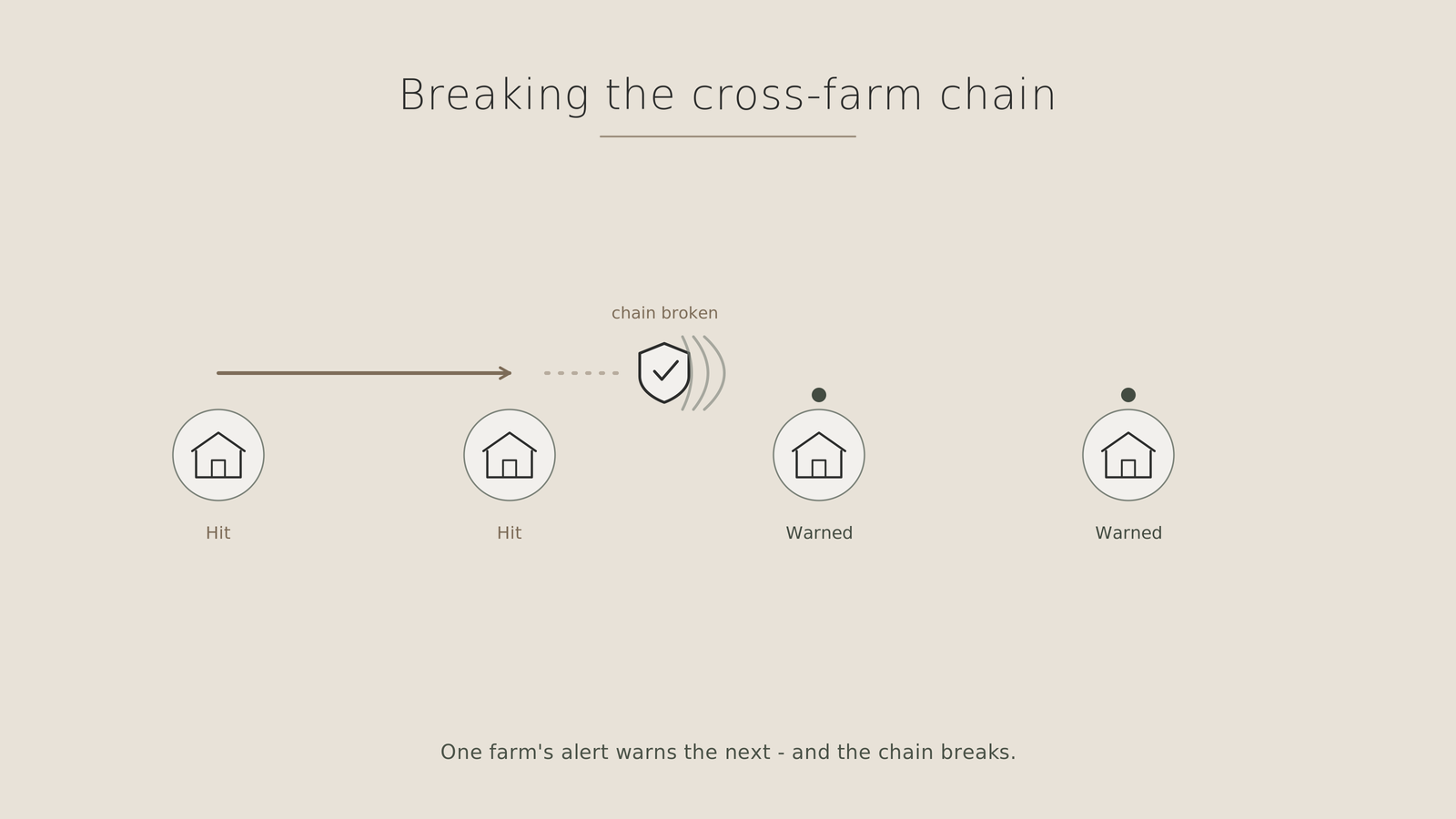
Farm Watch is a community-led intelligence-sharing network that alerts rural property owners to local crime patterns and security threats in real time. Members exchange information about suspicious activity, livestock theft, fly-tipping, and burglary through a dedicated communication channel, allowing farmers and landowners to strengthen their own defences before crime reaches their gate. The scheme is coordinated locally and costs nothing to join.
How does a Farm Watch scheme actually work?
Farm Watch operates as a decentralised network within a defined rural area, typically coordinated by a local police liaison officer or voluntary administrator. Members receive alerts via email, SMS, or WhatsApp when incidents occur nearby—a cattle theft two parishes over, a gang targeting sheds on the B-road, or traveller incursions. The alerts include basic details: location, type of crime, time of occurrence, and vehicle descriptions if available. This intelligence allows you to adjust gates, activate additional lighting, move valuable equipment indoors, or increase evening patrols on specific dates when risk is highest.
The scheme is not a policing tool; it is a mutual early-warning system. Information flows between members, not through a central authority that investigates every tip. Police support and promote Farm Watch through liaison, and they may act on serious or repeated crimes, but the primary value is alerting you to threats before they arrive at your boundary. Participation is voluntary, and membership typically spans 50 to 200 properties across a parish or small group of parishes, depending on rural density and uptake.
What crimes and threats does Farm Watch cover?
Farm Watch members report a defined scope of rural crime: livestock rustling (cattle, sheep, horses), equipment theft from yards and sheds, diesel and fuel theft, burglary of farm buildings and homes, vehicle theft, fly-tipping on land, and attempted break-ins. Many schemes also alert to non-crime threats that affect security planning: unauthorized access to land, suspicious persons or vehicles loitering, traveller movements, poaching, and hunt saboteur activity. The emphasis is on property crime and crimes that carry organised or repeat patterns—intelligence that helps you forecast risk and defend your holding proactively.
Each scheme defines its own scope based on local need. A livestock-intensive area may prioritize cattle theft alerts; a mixed holding in a market-town fringe may focus on burglary and quad-bike theft. When you join, you will understand what the scheme covers in your area and what is excluded (minor road traffic incidents, for example, or public-order matters that do not affect rural property).
Why is Farm Watch different from standard crime reporting?
Standard crime reporting is reactive: you contact police after a theft, and an investigation begins. Farm Watch is predictive. By sharing real-time intelligence across a community, the scheme reveals patterns—a gang hitting farms on Thursday nights, a serial quad-bike thief working the eastern parishes, livestock theft clustering around market days. You see the pattern before it reaches you, which allows you to upgrade cameras, lock gates earlier, move stock, or brief staff on what to watch for. This shift from reaction to anticipation is the core security value.
Farm Watch also addresses a rural policing reality: dispersed holdings and long response times mean police cannot patrol every boundary every night. By creating a network of informed eyes and shared intelligence, the scheme effectively multiplies local awareness. Your neighbour’s burglary alert becomes your early warning; your observation of a suspicious van becomes intelligence for the wider community. This peer-based defence cannot replace locks, cameras, and alarm systems, but it amplifies their effectiveness by helping you deploy them where risk is highest.
How do you join a Farm Watch scheme?
Farm Watch schemes are run locally, so the first step is to identify whether one exists in your area. Contact your local police station or search online for your parish name and ‘Farm Watch.’ Many county police forces maintain a Farm Watch page with contact details for local coordinators. If a scheme exists, the coordinator will explain membership, add you to the alert channel, and confirm which geographic area the scheme covers. Typically, membership is free and requires only a valid email, phone number, or messaging app to receive alerts. There are no membership fees, subscriptions, or contracts.
If no scheme exists in your area, you can establish one. The process is straightforward: contact your local police rural liaison officer, who will advise on coordinator role, communication platform (WhatsApp, email, or a dedicated app), and how to recruit neighbouring properties. Many rural crime partnerships provide templates and support for new schemes. Once launched, a Farm Watch scheme can be operational within weeks, and word spreads quickly in farming communities when members see early warning in action.
What should you do alongside Farm Watch to secure your holding?
Farm Watch provides intelligence, but it must work alongside physical and technical security. Membership alerts you that livestock theft is active in your area, but you also need secure fencing, functional gates with locks, and stock records (photographs, identification markings) that help police and insurers act quickly if theft occurs. The scheme flags that burglary is rising in adjacent parishes, but your farm buildings should have external lighting on sensors, reinforced doors, and CCTV or alarms that deter entry and record evidence. Farm Watch is the first layer of awareness; physical security, alarm systems, and good record-keeping are the next.
Many holding owners use Farm Watch alerts to refine their own security plan. When you learn that quad-bike theft is active, you move bikes into a locked barn or install additional motion-sensor lighting in high-risk areas. When cattle rustling is reported nearby, you increase evening checks and arrange temporary fencing to move stock away from boundary hedgerows. The intelligence from the scheme becomes actionable input for your own security decisions. For larger or higher-value holdings, professional security surveys and upgraded CCTV systems complement Farm Watch effectively.
How does Farm Watch fit into professional rural security planning?
Farm Watch is part of a layered approach to rural security. It provides local intelligence; physical security (fencing, lighting, gates) provides the first practical barrier; and alarms, CCTV, and monitoring systems provide detection and evidence if crime occurs. When you commission a professional security assessment for your holding, the consultant will review Farm Watch intelligence as context: what crimes are active in your area, what risk patterns emerge, what theft methods are prevalent. This intelligence helps the security professional prioritize which buildings, assets, or access points need the most investment. A professional survey informed by active Farm Watch alerts will be more targeted and cost-effective than a generic one.
If you are considering upgrading security systems or want a structured review of your holding’s vulnerability, a professional assessment that incorporates local crime intelligence will identify gaps that generic checklists miss. Farm Watch provides the community-level picture; a professional security survey provides the site-specific one. Together, they guide investment in cameras, alarms, and physical barriers that address genuine local risk.