
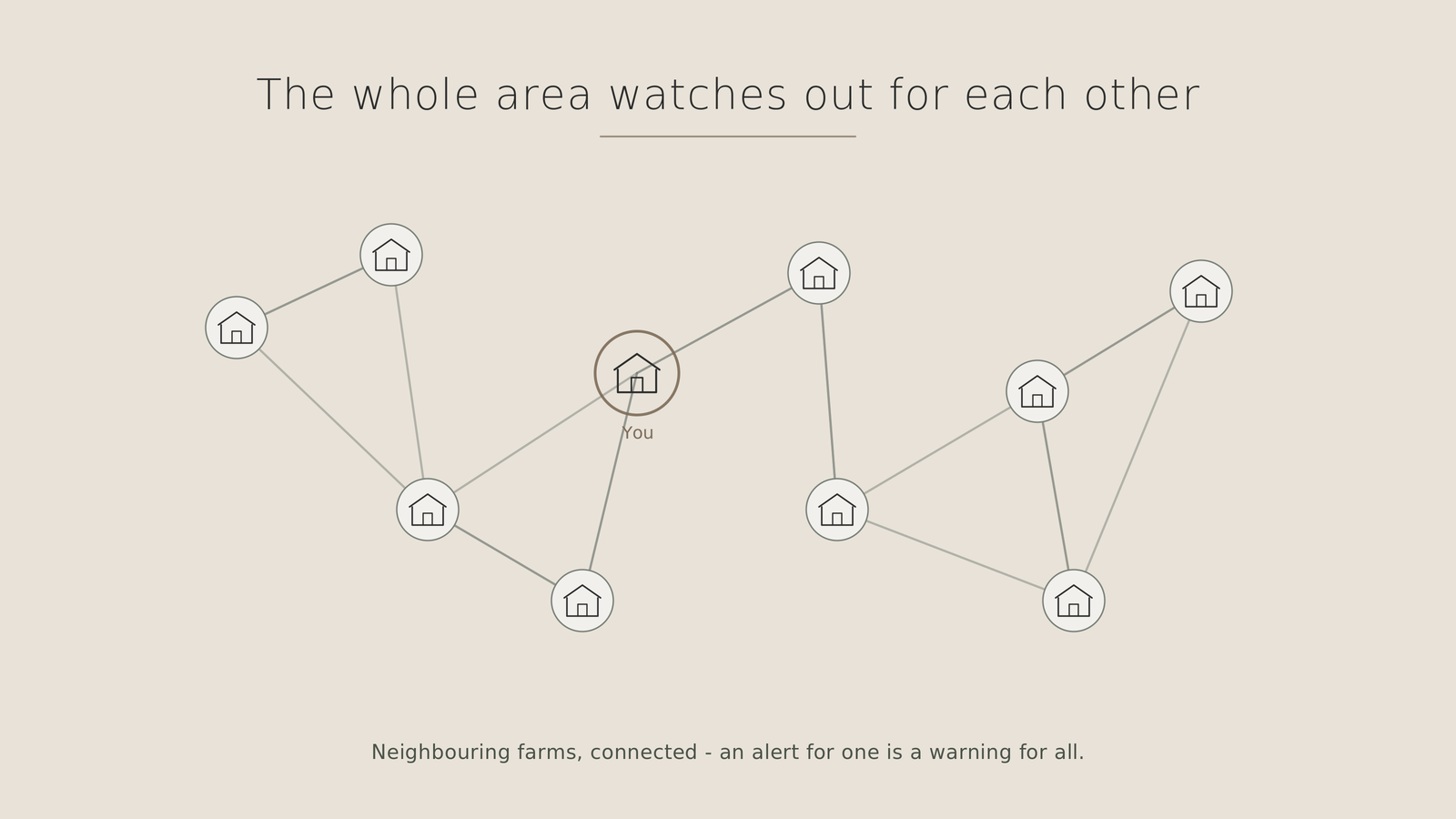
A farm watch area is a designated geographical zone where neighbouring rural properties coordinate informal security monitoring and information-sharing to deter and report criminal activity. Participants exchange contact details, share alerts about suspicious activity, and work together to create a visible, connected presence that makes their farms less attractive targets for theft, trespass, and organised rural crime.
How farm watch areas are structured
Farm watch areas operate as community-led networks within defined rural boundaries. Typically, farmers and landowners within a 5–10 mile radius form the core group, though the exact perimeter varies by geography and participant density. Each member holds contact details for others in the scheme — usually a simple phone list or messaging group — and agrees to report unusual activity promptly. The structure is informal: there is no central authority or formal membership fee. Instead, participants commit to the principle of mutual vigilance.
The effectiveness of a farm watch area depends on active participation and quick communication. Members report incidents such as suspicious vehicles, break-ins, equipment damage, or trespass to the group within hours. This real-time alert system allows neighbouring farms to increase their guard during high-risk periods — for example, if one property reports a theft attempt, nearby farms can increase patrols or activate security cameras. The psychological deterrent is substantial: criminals recognise that an organised, communicative community is riskier to target than isolated properties.
Why rural properties form watch areas
Farm crime — including machinery theft, fuel theft, livestock rustling, and break-ins — affects rural communities disproportionately. Police response times in remote areas can exceed an hour, making prevention the most practical defence. Isolated farmsteads become targets precisely because they lack the informal security presence of urban neighbourhoods. A farm watch area recreates that deterrent effect by ensuring that multiple eyes monitor a zone simultaneously.
Watch areas also address a practical isolation problem. Rural neighbours often know little about each other’s movements, making it impossible to spot unusual activity. A coordinated scheme inverts that: each member becomes familiar with the normal traffic patterns, vehicles, and visitors on neighbouring land. When a stranger’s truck appears at an odd hour, or unknown individuals are observed near farm gates, the difference between a routine visit and a criminal reconnaissance becomes visible. This contextual awareness is particularly powerful for detecting organised theft gangs, which typically scout properties before striking.
What activities a farm watch area covers
Farm watch areas monitor a broad range of rural crime. Theft of high-value equipment — quad bikes, diesel generators, GPS systems — is a primary concern, as is fuel theft, which affects both large operations and smallholdings. Livestock rustling, though less common, remains a serious risk in pastoral regions. Members also watch for signs of organised criminal activity: repeated surveillance of properties, suspicious encampments, or strangers asking questions about security arrangements and stock movements.
Beyond crime prevention, watch areas often document environmental issues affecting farmland: fly-tipping, poaching, or unauthorised access to sensitive areas. Some schemes extend to reporting damage to hedgerows, gates, or fencing, which can signal trespass. Members also exchange information about scams targeting rural communities, such as utility fraud or fake contractors. The scope is determined by the group’s own priorities, but the strongest schemes maintain focus on tangible security threats rather than diffuse concerns.
How watch areas complement formal security systems
A farm watch area is not a substitute for professional security systems — rather, it amplifies their effectiveness. CCTV, alarm systems, and perimeter fencing create hardened targets; a watch area creates a hostile environment for criminals by adding human surveillance and rapid response. A farm with good camera coverage but no community reporting network is visible but isolated. The same farm within an active watch area gains both technical deterrent and social vigilance.
The two work together practically. If a camera system records a theft, watch area members who have been alerted to watch for similar vehicles or individuals can provide leads to police. If one farm receives a suspicious visit from someone claiming to be a utility inspector, that intelligence shared across the network warns other members to verify visitors carefully. Professional installers of farm security systems increasingly recommend checking whether a property sits within an active watch area, or whether establishing one is feasible, as part of a layered defence strategy.
Getting started with or joining a farm watch area
Launching a watch area begins with identifying nearby farms with whom you share risk and logistics. Those within a realistic distance for regular face-to-face contact are ideal; telephone or messaging works, but rural familiarity builds trust and commitment. Approach neighbours directly, explain the concept, and propose an initial meeting to establish contact details and agree on how to report incidents — whether via a group chat, a shared phone tree, or a formal contact sheet.
If a watch area already exists in your region, contact the scheme’s organiser or your local police crime prevention officer, who can direct you. Police forces often support rural watch schemes by providing crime intelligence relevant to the area, visiting meetings to discuss recent trends, or helping establish new groups. There is no formal application process; membership is self-selecting. The key is clarity: ensure all participants understand the scope of monitoring, the method and speed of reporting, and the agreement to protect each other’s operational privacy while remaining vigilant about external threats.
Limitations and realistic expectations
A farm watch area is a deterrent and early-warning system, not a guarantee of prevention. It reduces the risk of being targeted by opportunistic criminals and can accelerate police response to incidents through better intelligence. However, highly organised theft gangs with inside knowledge, or criminal activity that occurs at night across large distances, may not be stopped by informal neighbourhood monitoring alone. Watch areas work best alongside professionally installed security systems, good boundary management, and regular police liaison.
Success also depends on sustained participation. Watch areas that weaken over time — because members move away, lose interest, or fail to report incidents — lose their deterrent value. The most effective schemes have at least one or two committed members who maintain the group contact list, coordinate information, and liaise with police. For prospective members, it is worth assessing the energy and commitment of existing participants before joining. A struggling scheme offers less protection than none at all.