
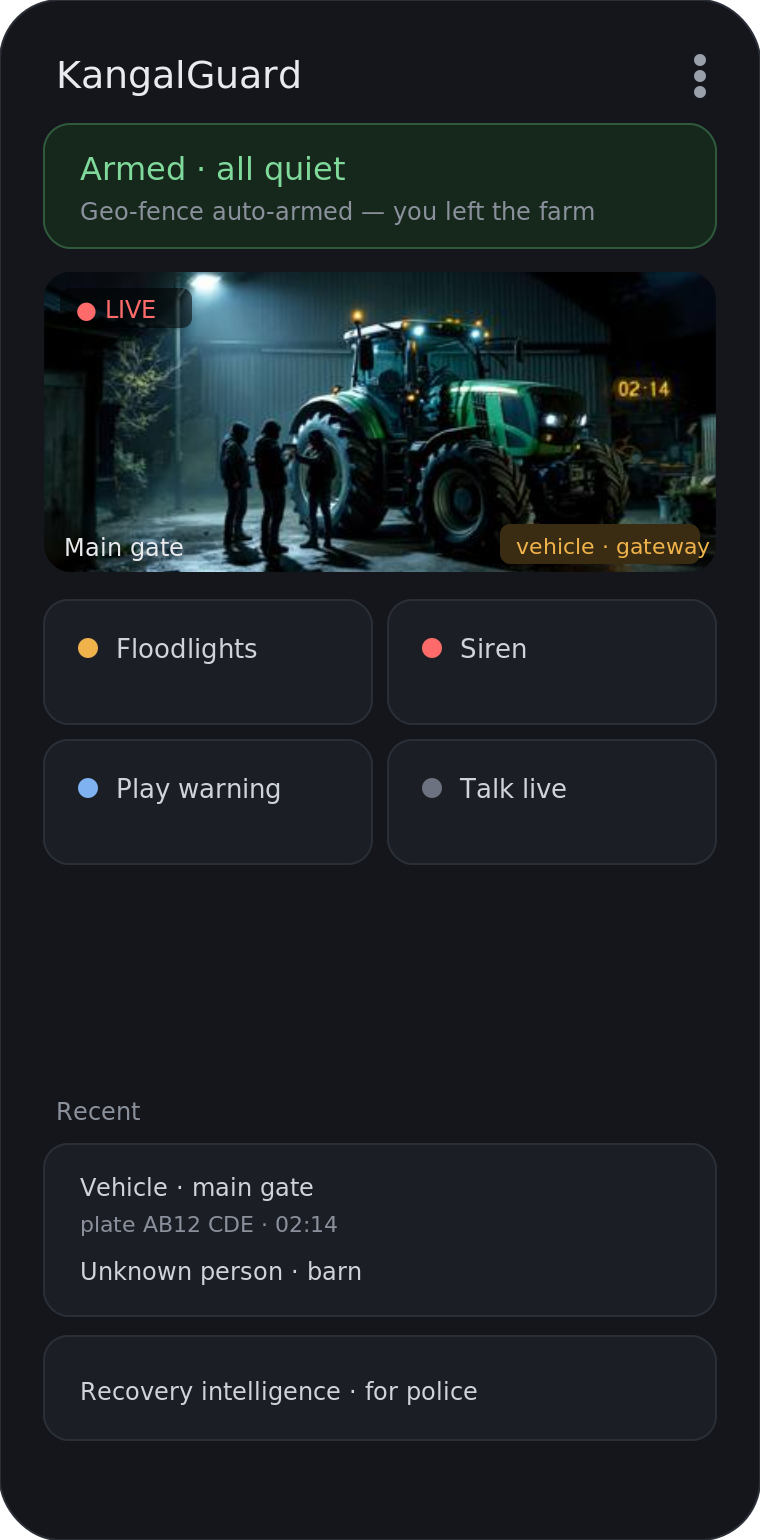
The best 4G CCTV camera for a farm combines reliable cellular connectivity, independent power supply, robust weatherproofing, and clear image quality in low light. Rural properties face unique installation challenges—mains power and fixed broadband are often unavailable—so 4G cameras must work standalone. This guide helps you evaluate the real trade-offs before selecting a system.
Why farms need 4G cameras instead of traditional CCTV
Traditional CCTV systems rely on fixed broadband connections and mains power infrastructure. Rural properties—particularly farms in exposed locations—often lack both. A 4G camera transmits footage directly over cellular networks, eliminating the need for network cable runs or fibre availability. This independence makes 4G the practical default for remote monitoring where infrastructure is sparse or prohibitively expensive to install.
The trade-off is real: 4G cameras depend on cellular signal strength and data allowance. Before selecting any model, confirm your property receives usable signal from at least one major network operator. A site survey is not optional; it is the foundation of a working system. Without adequate signal, even the best camera becomes decorative.
What power options do 4G cameras actually have
4G cameras require continuous power, typically 12V or mains supply. Mains power is simplest but demands outdoor electrical installation, which many rural properties cannot accommodate safely or at reasonable cost. Battery-only cameras are marketed for 'wireless' operation but face a hard truth: typical farm surveillance runs 24 hours daily. Rechargeable batteries last days, not weeks. Solar panels extend runtime but add cost, complexity, and weather dependency.
The pragmatic approach for most farms is hybrid power: mains supply where feasible (livestock housing, barns, main buildings), and solar-plus-battery for remote perimeter locations (gates, field access points, storage areas). Some installations use lightweight conduit or existing farm infrastructure to run low-voltage cable. Before committing to a camera model, understand your power strategy. A camera without reliable power is worse than no camera at all.
How weatherproofing affects long-term reliability
Farm environments are harsh. Cameras face rain, frost, dust, mud spray, and direct sunlight. IP ratings describe water and dust ingress protection: IP65 is a practical minimum for outdoor rural use (dust-tight, water-jet resistant). IP67 (temporary submersion) is stronger but rare in 4G models; IP66 (powerful jets) is the realistic sweet spot. Check the manufacturer's data sheet, not marketing copy. A camera rated IP65 by an independent lab will outlast one simply labelled 'weatherproof'.
Housing material also matters. Plastic housings are cheaper and lighter but degrade under UV exposure in sunny locations. Metal or reinforced polymer housings last longer. Sealed optical surfaces prevent internal condensation, which causes image fogging in temperature swings (common on farms overnight). Lens coatings reduce glare and improve low-light performance—valuable for early-morning livestock checks or night-time perimeter monitoring.
What image quality and low-light capability you actually need
Resolution alone does not guarantee useful footage. A 4MP camera produces crisper images than 2MP, but only if lighting is adequate. On farms, much activity happens at dusk, dawn, or night. 4G bandwidth limits mean high-resolution footage requires higher compression, which degrades detail in poor light. Resolution and lighting must balance. For livestock identification or vehicle registration plates, 4MP with infrared or starlight capability is justified. For perimeter motion detection alone, 2MP may suffice and consumes less data.
Infrared (IR) illumination is common but has limits: range typically 10–20 metres, and IR washes out colour in darkness, making detailed identification harder. Starlight sensors use available light more efficiently and preserve colour in low light, but cost more and need moonlight or ambient light. For a general farm overview, infrared is adequate. For detailed livestock welfare checks or vehicle identification, starlight or hybrid (IR plus low-light enhancement) is more useful. Test the actual footage quality on your site before purchasing.
How cellular data usage affects ongoing costs
A 4G camera streams or uploads footage using data. Continuous high-definition streaming consumes 1–3 GB per day, making unlimited data plans essential—and expensive. Most farms instead use event-based recording: the camera records locally to an SD card or hard drive and uploads clips only when motion is detected or on a schedule. This approach reduces data use to 100–500 MB per day, depending on activity and video quality.
Local storage (SD cards, NAS drives, or edge recording devices) is crucial. If the 4G connection fails temporarily, footage is not lost; it remains on the camera. When connectivity returns, clips upload automatically. For livestock welfare checks or incident investigation, this hybrid approach is more reliable than cloud-only systems. Confirm your chosen camera supports local recording and that you have a plan to retrieve or monitor that footage.
Key questions to answer before buying
Every farm installation is different. Before selecting a specific camera model, audit your actual needs. Where will the camera be mounted—barn wall, gate post, field shelter? What is the primary use: livestock welfare, perimeter monitoring, theft deterrent, incident recording? How much detail do you need: motion alerts alone, or facial recognition quality? Does mains power exist nearby, or is solar mandatory? Will you manage the system yourself, or do you need professional installation and support?
Test cellular signal strength at each intended location using a basic signal meter app or by visiting the site with a working 4G device. Confirm the network operator's coverage map aligns with your ground reality; maps are often optimistic. Calculate realistic data usage for your surveillance plan, then check costs with your chosen network provider. Only after answering these questions can you meaningfully compare camera models. Specifications mean nothing without a realistic plan for power, connectivity, and maintenance.