
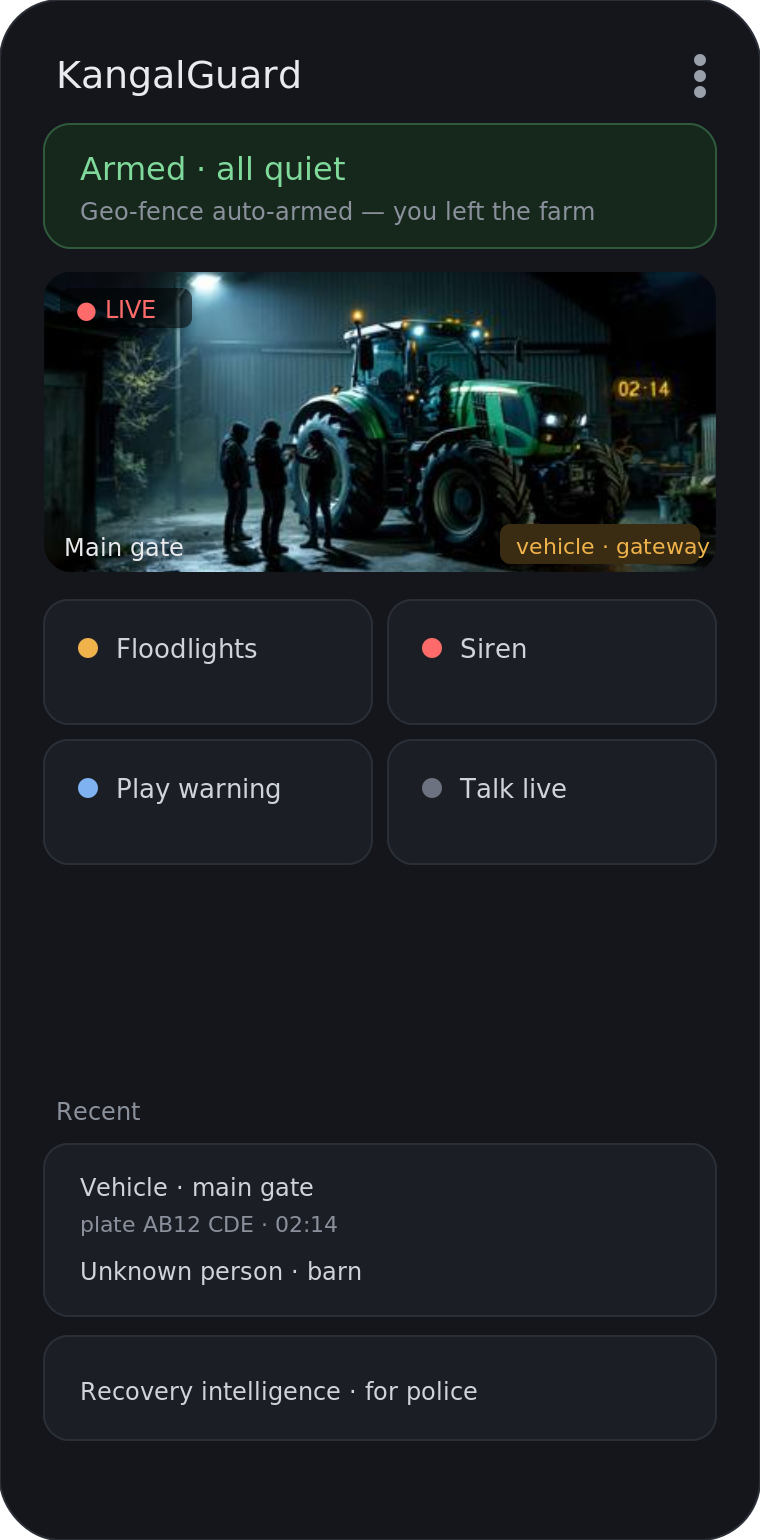
Yes, 4G security cameras do use SIM cards—a mobile network SIM slot that enables remote viewing and alerts without fixed broadband. This makes them the practical choice for farms and rural sites where traditional internet infrastructure is absent or unreliable. The sections below explain how they work, their real advantages and limitations, and whether they suit your property.
How does a 4G security camera with a SIM card actually work?
A 4G camera contains a SIM card slot (usually microSD or standard SIM format) that connects to a mobile network operator’s 4G infrastructure. Unlike cameras that rely on your farm’s WiFi or fixed broadband, the SIM card gives the camera its own independent data connection. When motion is detected or you request a live feed, the camera transmits footage and alerts via the mobile network to your phone or web interface, wherever you are. The SIM works like any mobile data service: you choose an operator and a data plan, and the camera consumes data each time it records, uploads, or streams.
The camera itself contains the SIM slot, processing power, a lens, and usually a small battery or mains supply. Installation is straightforward—insert the SIM, switch on, and connect to the provider’s app or web portal. There’s no wiring to your house or dependency on your home network, which is why they suit remote farm buildings, field gateways, and outhouses where running broadband would be impractical or costly.
What are the genuine advantages of a 4G camera for rural properties?
Independence from broadband is the primary benefit. Many farms in the UK operate in areas where fixed-line broadband is slow, unreliable, or simply unavailable. A 4G camera means you can install surveillance at a livestock shed, grain store, or field entrance without needing to lay fibre or copper to that location. You get real-time alerts and remote viewing from anywhere with mobile signal—crucial when you’re away from the farmstead or managing multiple sites.
Flexibility and speed of deployment matter too. A 4G system requires no IT infrastructure planning. You buy the camera, activate a SIM, and it’s operational within hours. Contrast that with running broadband cable to an outbuilding, which takes weeks of groundwork, civil installation, and cost. For farms that need to respond to theft, monitor livestock security during lambing or calving season, or protect high-value machinery, this speed is valuable.
Portability is another practical advantage. Because there’s no fixed internet connection, you can move a 4G camera between locations—from a field shelter one month to a new storage compound the next—without rerouting cables or reconfiguring your network.
What are the realistic limitations of 4G SIM-based cameras?
Signal strength and coverage are the main constraints. 4G coverage varies significantly across rural areas. Before committing, check the coverage map for your site on the operator’s network (Vodafone, EE, Three, O2). A camera installed in a location with poor signal will fail to upload footage reliably or may drop connection during critical moments. Some farms find that signal is adequate at the farmhouse but weak at a distant field gate. Elevation and local terrain affect coverage—a camera mounted high on a barn roof usually performs better than one in a valley or inside a stone building.
Data consumption and cost come second. Every time the camera records, detects motion, or you request a live stream, it uses your SIM’s data allowance. Continuous recording can consume 5–10 GB per month, depending on resolution and upload frequency. You’ll need a data plan large enough to accommodate this, and costs accumulate over time. Unlike broadband, which is typically a fixed monthly fee, 4G data overage charges can be steep if you exceed your allowance.
Battery and power reliability matter for outdoor installations. Many 4G cameras are mains-powered or use large external batteries. In remote locations, power failures or flat batteries can leave you blind. Solar charging can help, but that adds cost and requires good sunlight exposure. Wired power is more reliable but defeats some of the ‘no infrastructure’ advantage if you still need to run mains cable to the location.
Which farms and rural sites are the best fit for 4G cameras?
4G cameras work best where broadband is genuinely impractical or absent, and where the location is within reliable 4G coverage. Livestock farms use them to monitor calving sheds, lambing pens, and grazing fields during vulnerable periods. Arable operations deploy them at grain stores, fuel tanks, and equipment yards to deter theft when the farmstead is distant. Stud farms and equestrian properties monitor stables and paddocks from the house. Smallholdings and hobby farms with outhouses or workshops benefit from the installation speed and lack of network dependency.
Sites with existing fixed broadband but poor WiFi signal throughout the property also gain from 4G cameras as a supplement. A game camera on a far field boundary, for example, might use 4G where running WiFi cable is unrealistic. The key test is whether the specific location has usable 4G signal and whether the data plan cost is acceptable relative to your security need.
What should you check before buying a 4G camera?
First, verify 4G coverage at the exact installation point using the operator’s coverage checker tool and, ideally, a test SIM on-site. Coverage maps are estimates; actual signal strength varies by terrain and building materials. Second, confirm that the camera supports the frequency bands used by the operator you plan to use—not all 4G cameras work on all networks. Check the product specifications against your chosen operator’s band list (often Band 3, 7, or 20 in the UK).
Third, calculate realistic data costs. Request the camera’s typical monthly data consumption (usually quoted at standard resolution and motion-detection settings), then compare that against available SIM plans from your preferred operator. Some operators offer specialised IoT or M2M tariffs that are cheaper for camera use than standard mobile plans. Fourth, assess power requirements and verify you can supply reliable mains power or a robust battery+solar solution. Finally, check whether the manufacturer supports UK operators and whether their app or web interface is intuitive for your team.
Should you pair 4G cameras with broadband-connected systems?
Many farms benefit from a hybrid approach. If your farmhouse has adequate broadband, use cameras there via WiFi or Ethernet, and deploy 4G cameras only at remote outbuildings or fields. This spreads cost and leverages the right tool for each location. A farm with good signal coverage might use 4G for portable or temporary monitoring (during calving, building works, or high-risk periods), then rely on fixed broadband for permanent installations. A professional rural security installer can audit your property, test signal strength, and recommend which sites suit 4G and which suit fixed connections. A hybrid system often offers the best balance of reliability, cost, and flexibility.