
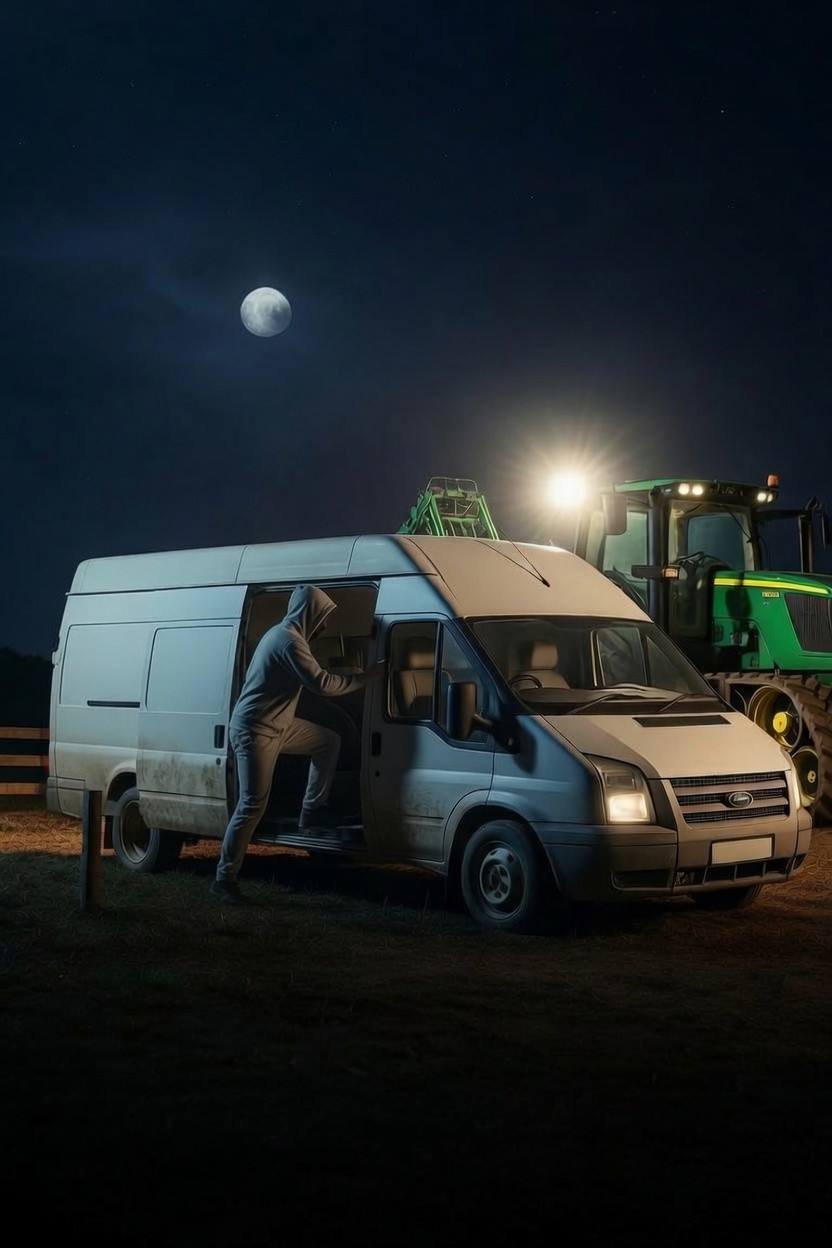
Effective farm security combines physical perimeter control, monitored access points, and visibility across vulnerable areas—starting with an honest assessment of your site’s layout, assets, and actual risk. Most farms benefit from a tiered approach: securing the perimeter first, controlling entry to high-value zones, then adding remote monitoring where blind spots exist. The right system depends on your site’s size, terrain, and what you’re protecting.
Why does farm security need to be different from standard commercial security?
Farms operate across dispersed, often remote land with multiple entry points, livestock, equipment, and structures spread over acres. Unlike a single building, a farm’s perimeter is lengthy and often bordered by public footpaths, woods, or neighbouring land. Weather—mud, rain, frost—degrades cameras and sensors faster than in urban settings. Power supply may be intermittent or require generators. These constraints mean off-the-shelf urban security doesn’t translate directly; rural systems must be robust, weather-resistant, and designed around the reality of farm terrain and access patterns.
Theft and trespass on farms often happen during off-peak hours or across several days, with perpetrators testing entry points methodically. Livestock can trigger alarms and create false alerts if not accounted for in sensor placement. Equipment stored in open yards or barns has different exposure than fixed property. A farm security strategy therefore needs to distinguish between legitimate farm activity (vehicles, staff, animals) and genuine intrusion, and to do so across long sightlines and poor light conditions.
What should you assess before choosing a security system?
Begin with a physical walk of your site’s perimeter. Note the existing boundaries: fencing condition, gates, gaps in hedgerows or tree cover. Identify where vehicles and staff enter, and where unauthorised access is most likely—a weak fence line, an unmanned gate, a boundary overlooking scrubland. Document the location of high-value assets: fuel stores, machinery, livestock buildings, fuel tanks, tool sheds. Sketch or photograph problem areas: poor lighting, blind corners where a vehicle could park unseen, or dense vegetation that masks approach routes.
Next, consider your operational pattern. Do you have 24-hour activity on site, or are there long periods with no one present? Do livestock or farm dogs move freely, potentially triggering motion sensors? What’s your internet connectivity like—reliable broadband, patchy 4G, or remote with no signal? Document power supply: mains electricity to all buildings, or generators and battery backup needed? This audit isn’t about installing systems yet; it’s about understanding your site’s constraints and vulnerabilities so any system you choose fits reality, not theory.
Ask yourself what you’re protecting: is theft the primary concern, or trespass, or both? Are you worried about night-time intrusion specifically, or all-hours activity? Would you use footage for prosecution, or is deterrence enough? Your answers shape the system’s priorities—for example, deterrence-led systems emphasize visible cameras and perimeter lighting; prosecution-led systems prioritize high-resolution recording and evidence preservation.
How does perimeter security form the foundation?
The perimeter is your first line of defence. Fencing—whether existing stock fencing, post-and-rail, or wire—should be intact and clearly mark the boundary. Gates should close and ideally lock; a chain or simple bolt deters casual trespass and marks the boundary as intentional. Where fencing is poor or absent, trees or hedgerow can create a visual barrier, though these don’t stop determined entry. The goal isn’t Fort Knox; it’s to make intrusion noticeable and time-consuming, so legitimate staff and visitors use designated entry points where activity can be observed or recorded.
Perimeter lighting, especially around gates, compounds, and high-value buildings, dramatically reduces the chance of night-time intrusion. Motion-triggered lights are efficient; they activate only when movement is detected, saving energy and drawing attention to activity. These should illuminate both the boundary and the approach to key buildings, ideally without creating deep shadows where someone could hide. Lighting also improves visibility for your own staff and reduces the psychological fear associated with isolated farm work at dusk or dawn.
What role do cameras and monitoring play?
Cameras serve two purposes: they deter known offenders who recognise they’re being recorded, and they provide evidence after an incident. In practice, a combination of visible cameras (including dummy cameras where budget is tight) and strategically placed monitored cameras works well. Visible cameras should cover main entry points and high-value asset areas; they signal that the site is serious about security. Monitored cameras should focus on blind spots: the rear of barns, gaps between buildings, access routes not visible from the house or main yard.
On farms, camera placement is dictated by sightline and weather. Cameras should be mounted high enough to avoid tampering but low enough to capture usable facial detail and number plates at entry points. They must be angled to avoid backlight (bright sky behind a subject), which renders detail useless. Weather protection—sealed housings, anti-glare covers—is essential in rural settings; mud, rain, and ice degrade image quality and can disable cheaper equipment within months. Consider cameras with infrared capability for night-time recording; colour night vision is increasingly affordable and provides better evidence than monochrome.
How do you control access without locking down farm operations?
Farm access is complex: staff arrive at variable times, visitors call unannounced, contractors work outside office hours, and livestock may need tending at any hour. Unlike an office, you can’t simply lock the gates. Instead, establish a hierarchy of access. The main public gate or entrance should be clearly marked and ideally monitored; visitors and contractors should use it, not bypass routes. A secondary gate for staff or regular suppliers can be less formal but should still be observable from the house or monitored. Emergency access routes—field gates used by contractors or forestry crews—should be marked and preferably locked unless in use.
Signage matters. A notice stating ‘Private Land—Authorised Access Only’ or ‘Livestock in Use’ combined with visible fencing and controlled gates makes it clear that unauthorised entry is not acceptable and strengthens your legal position if trespass or theft occurs. Consider a simple visitors’ log at the main gate, especially if you receive regular deliveries or contractors; it creates accountability and a record. For high-value or sensitive areas—fuel stores, equipment sheds—consider locked gates or bollards that prevent vehicle access; these are inexpensive and highly effective at stopping opportunistic theft.
What monitoring options exist beyond on-site cameras?
Cloud-based recording and remote viewing allow you to check your farm’s cameras from a phone or computer, day or night, regardless of where you are. This is valuable if you’re away from the farm, ill, or managing multiple properties. Most modern systems store footage on encrypted servers, with local backup on a recorder at the farm; this protects evidence even if the farm loses power. However, remote monitoring depends on reliable internet—if your broadband is patchy, a local recorder with on-site review may be more practical than cloud reliance.
Motion detection and alert systems can notify you immediately if movement is detected in a sensitive area after hours. These reduce the lag between intrusion and discovery, giving you time to contact police or check the site yourself. Smartphone push notifications are standard; some systems also integrate with local alarms or alert monitoring centres. False alerts are common on farms because of wildlife, wind-blown debris, or livestock movement; before installing motion alerts, ensure sensors are positioned and configured to minimise noise while catching genuine threats. A poorly tuned system creates alert fatigue and becomes unreliable.
What role does site management play in farm security?
The best camera system fails if the site remains an easy target. Simple discipline reduces risk: park vehicles in the yard after use, not scattered across fields; store fuel in a locked shed, not an open tank; keep gates locked unless in use; remove tools and equipment from buildings at the end of each shift rather than leaving them out. These habits cost nothing and deny the opportunistic thief a quick prize. Similarly, vegetation management—cutting back overhanging branches, clearing sight lines around buildings, removing cover near boundaries—makes surveillance more effective and intrusion less easy to hide.
Staff awareness is equally important. If your team understand why security matters and how to use entry gates, lock buildings, and report suspicious activity, they become an active part of the system. A simple briefing—‘lock the barn door after feeding, report any unusual vehicles, keep the main gate closed’—costs nothing and significantly hardens your site. Documentation is also crucial: photograph your equipment and livestock with identifying features, note serial numbers, and keep records stored safely off-site. In the event of theft, this evidence accelerates police investigation and insurance claims.