
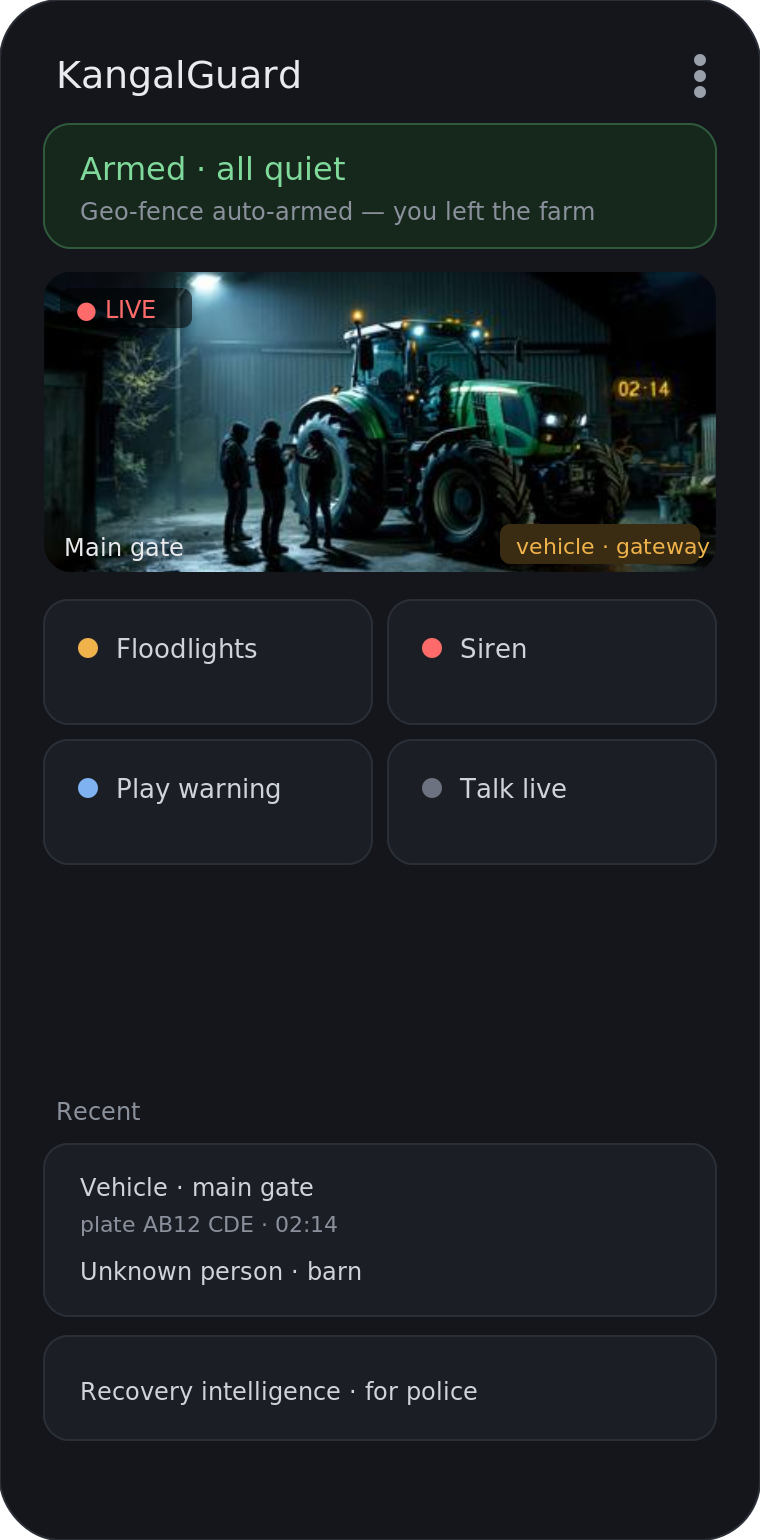
Farmwatch is a scheme operated across rural areas of the UK that helps farmers combat theft, fly-tipping and organised rural crime by connecting them with local police and other landowners through coordinated reporting and information-sharing. Members report suspicious activity to a network rather than in isolation, creating a collective deterrent against criminals targeting dispersed holdings.
What is Farmwatch and how does it work?
Farmwatch operates as a community-led crime prevention initiative where participating farmers and rural landowners report incidents and suspicious activity to a central coordinating body, usually a police liaison officer or dedicated team. Rather than making individual calls about isolated events, members feed observations into a shared database where patterns emerge. Repeated thefts of specific machinery, vehicles spotted on multiple holdings, or fly-tipping hotspots become visible across a wider geography than any single farm could observe alone.
The scheme functions as a two-way channel. Farmers receive alerts about active criminal activity in their area — for example, warning that plant theft gangs are operating in the district, or that specific vehicles have been used in burglaries nearby. Police use the data to identify patterns, deploy resources strategically, and build evidence for investigation and prosecution. The coordination transforms what would otherwise be scattered, unrelated crimes into a coherent picture.
How does membership reduce actual theft and loss on farms?
Farmwatch membership creates visible deterrence. Farms displaying Farmwatch signs and participating in the scheme signal to potential criminals that the holding is part of a monitored network. Thieves operating on a region know that unusual activity is more likely to be reported, cross-referenced with other incidents, and acted on. This shifts the farm from an isolated target to part of a collective watch.
The practical value sits in early warning. When a neighbour reports that quad bikes matching yours were seen on a trailer three villages over, or that a suspected organised gang is moving through the county, you can take immediate precautions — move valuable equipment, increase surveillance, alert your insurer, or brief staff. You also avoid repeating the mistakes of farms already hit in the same crime wave. The intelligence advantage shortens the window between an incident and protective action.
What types of rural crime does Farmwatch address?
Farmwatch schemes focus on the crimes most damaging to rural enterprises: theft of machinery, tools, vehicles, and livestock; organised metal theft from fencing and farm infrastructure; fuel and diesel theft; and fly-tipping on land. These are not random opportunistic acts in most cases; they are conducted by active criminal networks that target rural areas because response times are slow, witnesses are dispersed, and properties are often isolated.
Fly-tipping, in particular, creates environmental and financial liability for farmers. Reporting to Farmwatch creates a record linked to the area, helping councils and environmental agencies identify patterns and take enforcement action. Livestock theft, once rare, has resurged; coordinated reporting helps identify traders and transporters moving stolen animals across regions. The scheme’s value lies in moving these crimes from individual farmer problems to collective community intelligence that attracts formal police attention and prosecution.
How is Farmwatch information used by police and enforcement agencies?
Police use Farmwatch data to map crime hotspots, identify repeat offenders, and build cases for arrest and prosecution. A single theft report from one farm is minor; five similar thefts from farms in adjoining postcodes within six weeks, all reported through Farmwatch, reveals a gang’s modus operandi and patrol pattern. Officers can then establish surveillance, intercept vehicles, and recover stolen goods. Without the coordinated reporting, each farm sees a one-off incident and moves on.
Farmwatch also improves response quality. When a farmer reports suspected fly-tipping, environmental enforcement officers use the Farmwatch network to understand whether this is a single incident or part of a pattern affecting multiple landowners. This context determines urgency and resource allocation. In areas with active Farmwatch schemes, police and councils develop dedicated rural crime teams and task forces because the data proves the scale of the problem. Investment in prevention and prosecution follows evidence, not guesswork.
What should a farmer do to join and use Farmwatch effectively?
Joining Farmwatch usually begins with contacting the local police rural crime team or the coordinating body in your area. Membership is typically free or very low cost. Once enrolled, you receive contact details for reporting and often an email or radio alert system for incoming warnings. Display the Farmwatch sign visibly on your property; it serves as a deterrent and confirms to neighbours and officials that you are part of the network.
Effective use requires discipline. Report incidents promptly and accurately — the time, location, description of suspects or vehicles, and what was targeted. Vague reports ('something looked odd') are less useful than specific observations ('grey transit van, partial registration visible, loading farm equipment at 2:30 a.m.'). Read and act on alerts you receive. If your area is experiencing quad bike theft and Farmwatch warns you, move your machines or secure them differently that week. The scheme only works if members treat the intelligence seriously and respond with their own precautions.
Does Farmwatch replace professional farm security systems?
Farmwatch is a reporting and intelligence framework; it does not replace locks, gates, CCTV, or alarms. It amplifies the effect of those systems by creating a penalty for criminals in the form of coordinated detection and police attention. A farm with CCTV and Farmwatch membership is significantly better protected than one with CCTV alone, because footage can be cross-referenced with Farmwatch alerts and patterns, and reported incidents feed into a wider investigation.
The strongest approach combines both. Professional security systems provide evidence and immediate response on your holding. Farmwatch provides context, early warning, and the investigative leverage that turns individual crimes into prosecutable patterns. If your farm has valuable equipment or is in an area with active rural crime, both layers are justified. Contact a rural security specialist to assess which physical measures suit your specific risk profile, and ensure Farmwatch reporting is also in place to extend that protection across your wider community.