
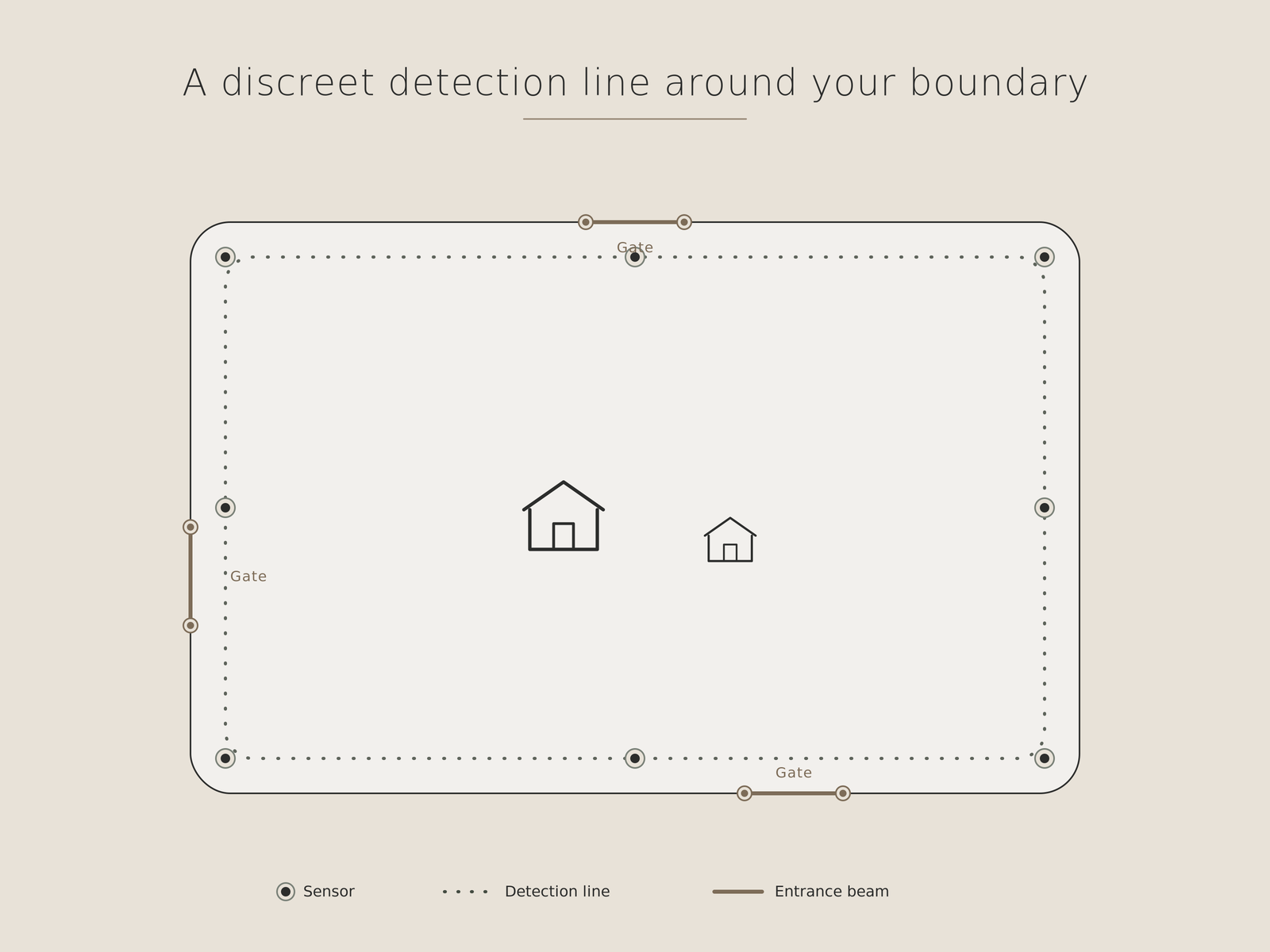
Rural gardens and sheds face distinct security challenges because they sit at the boundary of your property, often away from the house and visible from public roads or footpaths. Understanding what’s actually at risk—whether tools, equipment, livestock feed, or fuel storage—is the first step toward a security approach that matches your property’s real vulnerabilities, not generic assumptions.
Why gardens and outbuildings are a common target on rural properties
Rural sheds and garden structures attract theft because they often sit isolated from main buildings, have single points of entry, and store high-value items with minimal oversight. Unlike a garage attached to a house, an outbuilding can be approached from multiple angles and worked on without being seen from windows or roads. The distance from neighbours—a defining feature of rural living—means activity at a shed can go unnoticed for hours.
The specific contents matter. Garden and shed spaces commonly hold power tools, fuel stores, quad bikes, fencing materials, or agricultural equipment—all items with ready resale value and minimal identifying marks. A thief can load a trailer and leave in minutes. The seasonal nature of rural work also creates vulnerability: sheds left closed for winter months, or equipment stored during off-season, become soft targets if access is only locked with a padlock or basic bolt.
What to inventory before assessing security needs
Start by listing what’s stored in the garden or shed and what it would cost to replace. Include tools, machinery, fuel, feedstock, and materials. Note which items are seasonal (stored for months) and which are accessed regularly. This inventory isn’t about insurance claims alone—it reveals what a thief would target first and how long they might spend on your property.
Next, document the shed’s construction and existing access points. Is it wooden or metal? Single or double doors? Does it have windows? Assess the ground around it: is there clear approach from the property boundary, or is sight-line restricted by fencing or landscaping? Document the proximity to the main house, neighbouring properties, and public access points like footpaths or farm gates. This physical audit forms the basis for deciding where vulnerabilities really lie.
How site layout affects what security approach will actually work
A shed fifty metres from the house with a clear view from the road requires a different response than one tucked behind the farm complex. Distance affects response time if an alarm sounds—you won’t hear it from inside the house unless there’s a connection to a monitoring system. Line of sight from public areas (roads, footpaths, neighbouring fields) determines whether activity at a shed is visible to casual passers-by or hidden. Height of surrounding fencing or trees changes whether the shed is overlooked by neighbours who might notice unusual activity.
The position of gates, access routes, and property boundaries also shapes strategy. A shed accessible directly from a public footpath, for example, faces different pressures than one within a gated drive. Similarly, a property with a single entrance point can control access differently than one with multiple gates or open boundaries. Before selecting any specific security measure, walk the boundary and observe the property from the perspective of someone unfamiliar with it. What’s easily visible? Where could someone approach unseen? This informs whether the priority is deterrence (making the shed look too difficult to target), detection (knowing when someone is on the property), or denial of access (physical barriers).
Structural security: locks, doors, and materials that withstand real use
A standard padlock on a wooden shed door is easily cut. For sheds containing valuable equipment, consider reinforced hinges (which prevent the door from being lifted off), heavy-duty bolts that sit proud of the frame (harder to lever), and padlocks rated to a recognised standard. Door frames themselves need attention: a wooden frame can be splintered or the hasp torn away. Metal-framed sheds or reinforced frames (adding metal banding to vulnerable corners) resist forced entry more effectively. Windows should be reduced in size, fitted with bars, or removed entirely if visibility into the shed creates temptation.
Material choice matters for durability under rural conditions. Wooden sheds weather and splinter, making them easier to breach; metal sheds are more secure but need to be properly anchored to prevent tilting or underpinning. Whatever the structure, the secure element (lock, bolts, hinges, frame) should be stronger than the material around it—otherwise a thief simply breaks through the weaker material. For seasonal storage, consider whether the shed needs to be accessed regularly; if not, a more robust but less convenient locking method (such as a padlock on a hasp rather than a key lock on a swollen wooden door) may be more reliable.
When monitoring or detection systems make sense for a garden outbuilding
A CCTV camera or motion sensor becomes cost-effective when the shed holds high-value items, is far from the house, or is accessed infrequently so you wouldn’t immediately notice a break-in. Modern systems don’t require mains power (solar-powered options suit remote sheds) or expensive wiring; many record to cloud storage rather than on-site. The camera doesn’t need to stop a thief, but footage can support police investigation and deter someone who knows they’re being recorded. A motion-activated light achieves similar deterrent effect at lower cost, though it’s less useful if the shed is already in sight of the house.
Detection systems also work as an early-warning tool. An alarm triggered by door opening or window breakage alerts you immediately, rather than discovering a theft hours or days later. This is most valuable if the shed is accessed by multiple household members or staff—unusual activity becomes obvious. For remote properties without mains power or fixed network connection, solar-powered sensors with SIM-based alerts (sending a message to your phone) can be more practical than wired systems. The choice depends on the property layout, how often the shed is accessed, and whether anyone is on-site to respond quickly to an alert.
Making a realistic plan: starting with what actually needs securing
Avoid the mistake of securing every window and corner of a shed equally. If the shed is only a toolstore, the priority is the door. If it houses a fuel tank or quad bike, decide whether access control (a locked gate) prevents the thief from reaching the shed at all, or whether the shed itself must be hard to enter. Prioritise the entry point that faces the public boundary or least-supervised approach. If the shed sits on open ground, a perimeter fence with a lockable gate reduces approach risk before adding shed-specific security.
Document your approach so it’s clear to anyone else on the property (family, staff, contractors) what they’re securing against and why. A shed locked with a padlock only makes sense if there’s an understanding that low-value items are stored inside; if someone adds expensive equipment, the security method needs revisiting. As contents change seasonally, so does risk—a shed full of spring seed is a different target to the same shed storing only empty pots in winter. Reviewing security annually, tying it to seasonal storage or equipment changes, keeps it effective rather than gradually obsolete.