
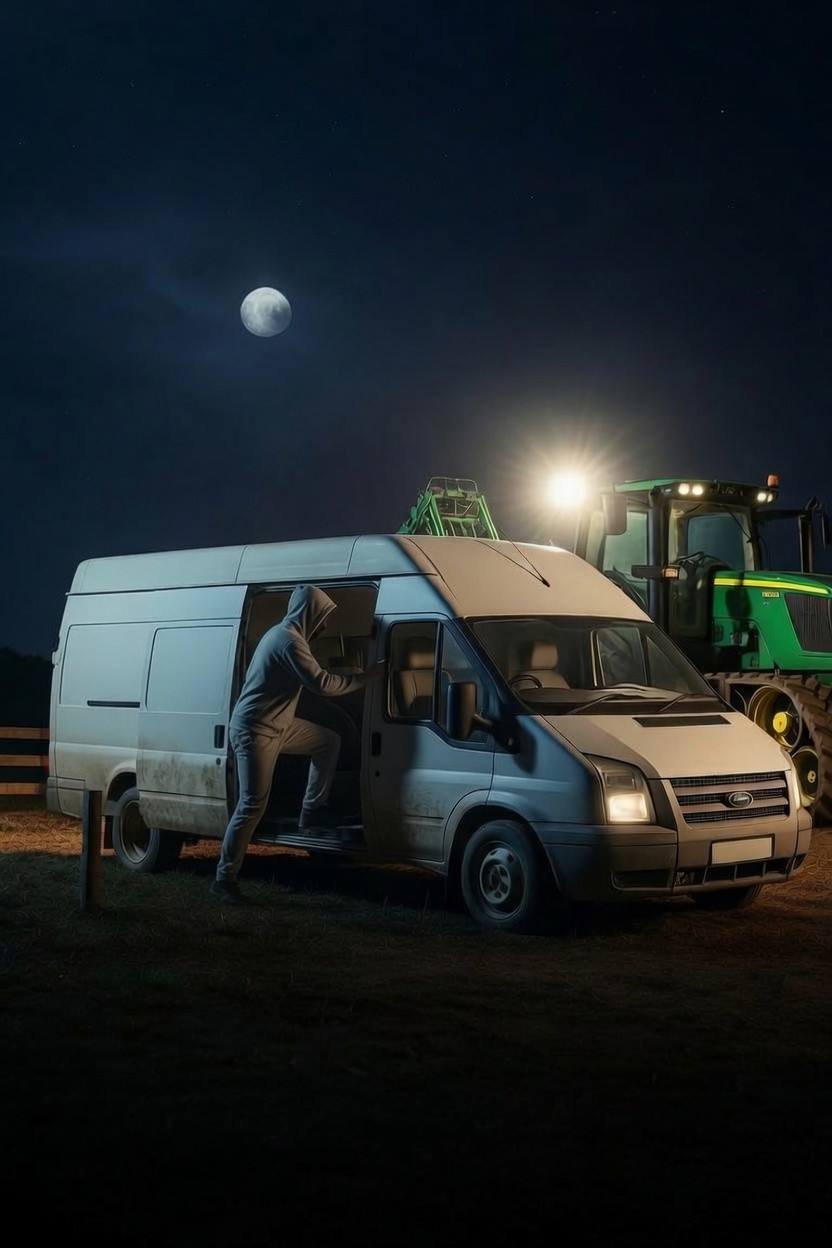
Yes, security cameras work on 4G, but only where mobile signal reaches and with careful planning around bandwidth and power. 4G is a practical backup for remote farms where fixed broadband isn’t available, yet it has real constraints: data limits, latency, and signal dead zones. This guide walks you through when 4G makes sense, what it costs in data terms, and what to expect on a rural property.
How 4G camera systems actually work on farms
A 4G security camera uses mobile network infrastructure the same way your phone does. The camera itself contains a SIM card and a modem; it connects to the nearest mobile mast, uploads footage in real time or on a schedule, and sends alerts to your phone or cloud server. Unlike fixed broadband, 4G doesn’t require a landline or fibre connection at the camera location. For farms where the main building sits 500 metres from the nearest infrastructure or where terrain blocks cable runs, 4G removes the installation cost and disruption of trenching or overhead ducting.
The video data flows from the camera to a cloud platform or a local storage device. Most rural installers pair 4G cameras with cloud recording because on-site hard drives become problematic during power cuts or equipment failure. Cloud storage also lets you view footage from anywhere without a fixed local network. The SIM card in the camera handles all connectivity; there’s no need for a router or separate modem at the camera mast or building corner.
What bandwidth does a 4G camera actually use?
A single HD camera transmitting continuously over 4G typically consumes 1–3 GB per day, depending on resolution, compression, and frame rate. Lower resolution (720p) or motion-triggered recording cuts this significantly—often to 300–500 MB daily. A farm with two or three cameras running 24/7 can quickly breach standard mobile data caps (most rural plans offer 50–100 GB monthly). Before specifying 4G, you must audit which mobile provider offers the best signal at your location and check their data allowances. Unlimited data plans exist but cost more; some rural properties find they need one per camera.
Latency matters too. 4G introduces a 40–100 millisecond delay compared to fixed broadband, which is noticeable if you’re using live view for active monitoring or two-way audio. For scheduled or event-triggered uploads, or for passive review after an incident, this lag is acceptable. The question isn’t whether 4G works, but whether the data allowance and latency suit your use case and budget.
Where does 4G signal fail on rural properties?
4G coverage is map-based but real-world signal strength depends on terrain, building materials, and distance from the nearest mast. A 1:1 ordnance survey map or a provider’s coverage checker will show which areas your site falls under, yet that doesn’t guarantee a usable signal indoors or behind stone walls. Many farm buildings—especially older barns with thick masonry or metal-clad structures—block mobile signals severely. A camera mounted on an exposed pole or gable wall performs better than one inside a stone outbuilding. Before committing to 4G, field-test the actual signal strength at the exact camera location with a mobile phone on that network.
Dead zones are common in valleys, alongside dense woodland, or at the far edge of a mast’s range. If your property sits more than 3–5 kilometres from the nearest mast, or if the topography shields you from all nearby transmitters, 4G may be unreliable. In these cases, hybrid systems—4G as a backup, with a primary wired or mesh network—often make more sense than relying on 4G alone.
Power and weatherproofing: what 4G cameras need
A 4G camera requires continuous power, and finding a suitable supply at a remote location is often the hardest part of rural installation. Most cameras draw 5–15 watts continuously. If mains power isn’t nearby, solar plus battery backup becomes necessary. Solar panels must face south with no shade; winter daylight is short in the UK, so a battery capacity (typically 50–200 Ah lithium) must carry the camera through cloudy periods. This adds cost and maintenance. Alternatively, running a dedicated supply line from the farm building to the camera post—burying armoured cable or using above-ground trunking—is sometimes cheaper than solar and avoids battery replacement.
4G cameras rated for outdoor use carry IP ratings (typically IP65 or IP67) and operate across a temperature range. However, the exposed SIM card slot, battery terminals (if solar), and cabling connectors are vulnerable to moisture ingress. Proper conduit sealing, silicone grommet seals on cable entries, and inspection after heavy rain or frost cycles prevent signal loss and equipment failure. In areas with high salt spray (coastal farms), stainless hardware and conformal coating on circuit boards extend lifespan.
When 4G is the right choice versus alternatives
4G works best as a primary system where fixed broadband is genuinely unavailable and as a backup where it is. If your farm is within reach of superfast broadband (30 Mbps+), wired or mesh systems are usually more reliable and cheaper over five years because data isn’t metered. If 4G is your only option, ensure you have a large data allowance or can justify the cost of unlimited plans. 4G also suits short-term monitoring—a livestock check or seasonal access control—where you don’t expect to run it indefinitely. For permanent security on a remote site, hybrid systems (wired primary + 4G backup) give resilience without excessive data spend.
Ask yourself: Does the site have any mains power? Can I reach it with cable? Is mobile signal tested and strong? How much footage do I need to store? The answers shape whether 4G is pragmatic or a frustration waiting to happen. A site with good signal, limited power, and a modest data allowance often thrives on 4G. A site with poor signal, heavy power constraints, and continuous recording demand does not.
Installation and ongoing maintenance for 4G systems
Installing a 4G camera is faster than trenching cable, but it still demands proper mounting, weatherproofing, and testing. The camera mast or bracket must face the strongest signal direction (usually towards the nearest known mast). Cable runs should be protected and grounded to avoid signal interference. The SIM card setup involves activating it on a suitable mobile plan, configuring APN settings on the camera, and testing upload before mounting the camera in its final position. Many rural installers install the camera on a temporary test pole first, verify signal and data flow, then move it to its permanent location.
Once live, 4G systems need quarterly checks: inspect weatherseals, verify the SIM remains active (some providers suspend dormant accounts), test upload speeds after any network outages, and clean the lens. In winter, check battery levels on solar systems weekly and clear any snow from panels. If signal degrades (often due to vegetation growth or changes at neighbouring properties), you may need to reposition the camera or add a signal booster. These are small tasks, but they’re preventive; neglect them and you’ll miss footage at the moment you need it most.