
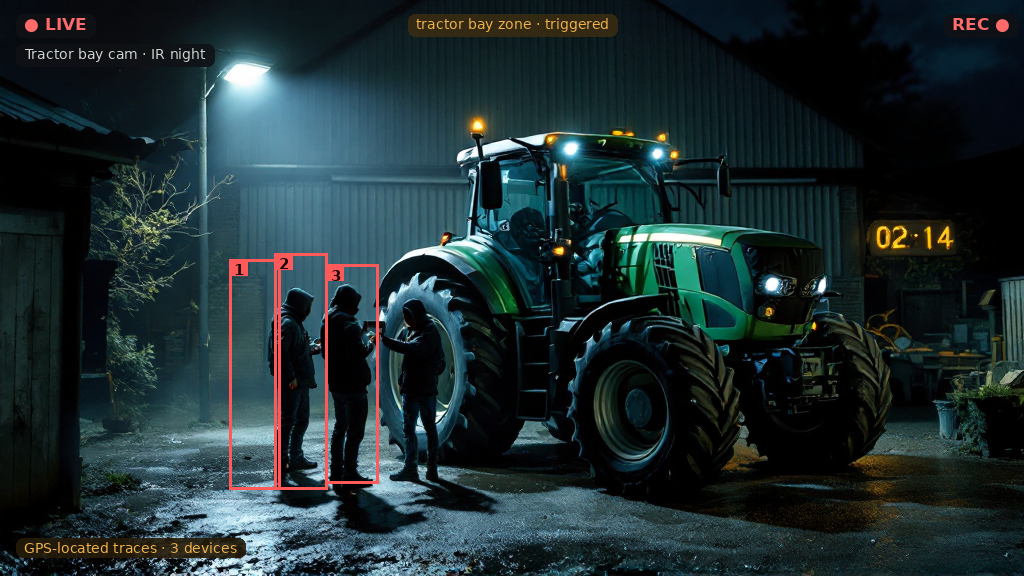
4G CCTV systems transmit footage over mobile networks instead of fixed broadband, making them viable for farms & rural properties where fibre or traditional internet is absent or unreliable. They work by connecting a camera unit to a 4G router that uses cellular data; live feed & recordings stream to your phone or remote dashboard. Success depends on local signal strength, data allowance & your willingness to monitor costs over time.
What is 4G CCTV & how does it differ from fixed-line systems?
4G CCTV uses mobile networks to transmit footage instead of relying on fibre or copper broadband lines. A camera connects to a 4G-enabled router on your property; that router holds a SIM card & sends encrypted video data to the cloud or directly to your phone. Fixed-line CCTV, by contrast, requires an internet connection from an ISP & typically stores footage locally on a recorder unit or in cloud storage tied to a stable upload speed.
The key practical difference is independence from fixed infrastructure. Rural properties — including working farms, storage buildings, holiday lets & remote cottages — often sit outside broadband provision areas or suffer from poor upload speeds that make traditional NVR (network video recorder) systems unreliable. 4G systems sidestep this constraint, though they introduce a different set of trade-offs around signal reliability & ongoing data costs.
Where does 4G CCTV perform well & where does it struggle?
4G works best on rural properties with reliable mobile signal — typically within 1–2 km of a mast. You can check predicted coverage on Ofcom’s signal strength map or contact your chosen mobile provider. A property with consistent 3G or 4G bars will support continuous or motion-triggered recording without drop-outs. Exposed hillside farms, coastal holdings & open moorland often have better coverage than woodland sites or deep valleys.
Performance suffers in genuine signal black spots. If your site has no bars, or only sporadic signal, 4G CCTV will not reliably stream or record. Signal also degrades during poor weather; heavy rain & high winds can temporarily block transmission. Additionally, 4G systems depend on the mobile network operator’s coverage & service quality — congestion during peak hours may slow upload speed, which matters if you need real-time alerts or quick footage access. For properties where broadband is available & stable, a fixed-line system typically offers more predictable performance & lower ongoing costs.
What are the genuine cost implications of running 4G CCTV?
Initial hardware costs for a 4G-enabled camera & router are broadly comparable to a fixed-line system: a single outdoor 4G camera, router & professional installation sit in the same ballpark as equivalent fixed-line kits. The significant difference appears in ongoing running costs. Every 4G system requires a monthly or annual mobile data contract, either a dedicated IoT SIM or a standard mobile data plan. Depending on resolution, recording frequency & cloud backup, monthly data use ranges widely — motion-triggered recording on a single camera may consume 5–15 GB per month; continuous high-resolution recording can exceed 50 GB.
Over three years, those data charges add up & may exceed the cost of installing basic broadband if it becomes available. You should also factor in router maintenance, SIM management & the risk of cost increases if the operator changes pricing. Some rural properties find 4G cost-effective because they avoid the upfront expense of bringing in broadband infrastructure; others discover that a data contract becomes expensive if they later decide to add more cameras or increase recording quality. Always request a written estimate of expected monthly data use before committing.
What equipment & setup do you actually need?
A working 4G CCTV system comprises four key elements: the cameras themselves (4G-enabled or paired with a 4G module), a 4G router with a SIM slot, external antenna(s) for signal boost, & cloud storage or app-based access. Professional installers will mount the router & antenna on the highest point of your property — typically a barn, gable end or pole — to maximize signal strength. Cabling runs from the router to cameras, which are powered either by POE (power over ethernet) if the router supports it, or by separate 12V supplies.
The antenna is critical & often overlooked. A standard internal or router-mounted antenna rarely achieves the directional gain needed at distance from a mast. An external directional antenna, mounted on a pole or roof & pointed toward the nearest mast, can mean the difference between usable signal & no signal. Installation by a firm experienced in rural systems saves time & avoids common mistakes like poor antenna placement or inadequate cable shielding in high-interference areas. Before purchase, confirm that your chosen cameras & router are supported by UK mobile operators & that they use standard protocols (RTSP, HTTP) so you’re not locked into proprietary software.
How do you decide between 4G & other options for rural coverage?
The choice depends on three factors: your local broadband availability, the urgency of your security need, & your tolerance for ongoing data costs. If mains broadband or superfast fibre is available & reliable, a fixed-line system (NVR with local storage or cloud backup) almost always offers better value & fewer constraints. If your property sits in a genuine not-spot & mobile signal is strong, 4G CCTV is pragmatic. If signal is weak but you need monitoring urgently, a hybrid approach — 4G for live alerts, local SD-card backup for offline recording — buys time until broadband arrives.
Some rural properties also consider satellite internet (Starlink, Viasat) as a broadband alternative; while latency remains an issue, it bypasses the mobile network altogether. Speak with a rural security installer who knows your area & can test signal strength on-site. They can advise whether 4G is viable, whether signal boosting equipment is necessary, & what data allowance your intended use will actually consume. That conversation is worth more than any generic checklist, because rural connectivity is highly site-specific.
What questions should you ask before committing to a 4G system?
Ask your installer to conduct a professional signal survey before design — not just a mobile-phone bar check, but a measurement at the proposed router & camera locations using a signal meter. Request a written estimate of monthly data use based on your intended recording mode (continuous vs. motion-triggered), camera count & resolution. Confirm which mobile operators the equipment supports & whether you have freedom to switch providers if pricing changes. Ask about backup power: will the system keep recording during a mains outage, & for how long?
Clarify cloud storage terms — who owns the footage, how long it’s retained, & whether there are retrieval fees if you need old clips. Understand the camera’s local recording options (SD card, USB) in case the 4G link drops. Finally, establish a clear support pathway: if signal fails or the router reboots, who diagnoses the problem & how quickly can they respond? Rural properties often sit far from engineer call-outs, so remote troubleshooting & fast parts replacement matter more than they do in urban areas.