
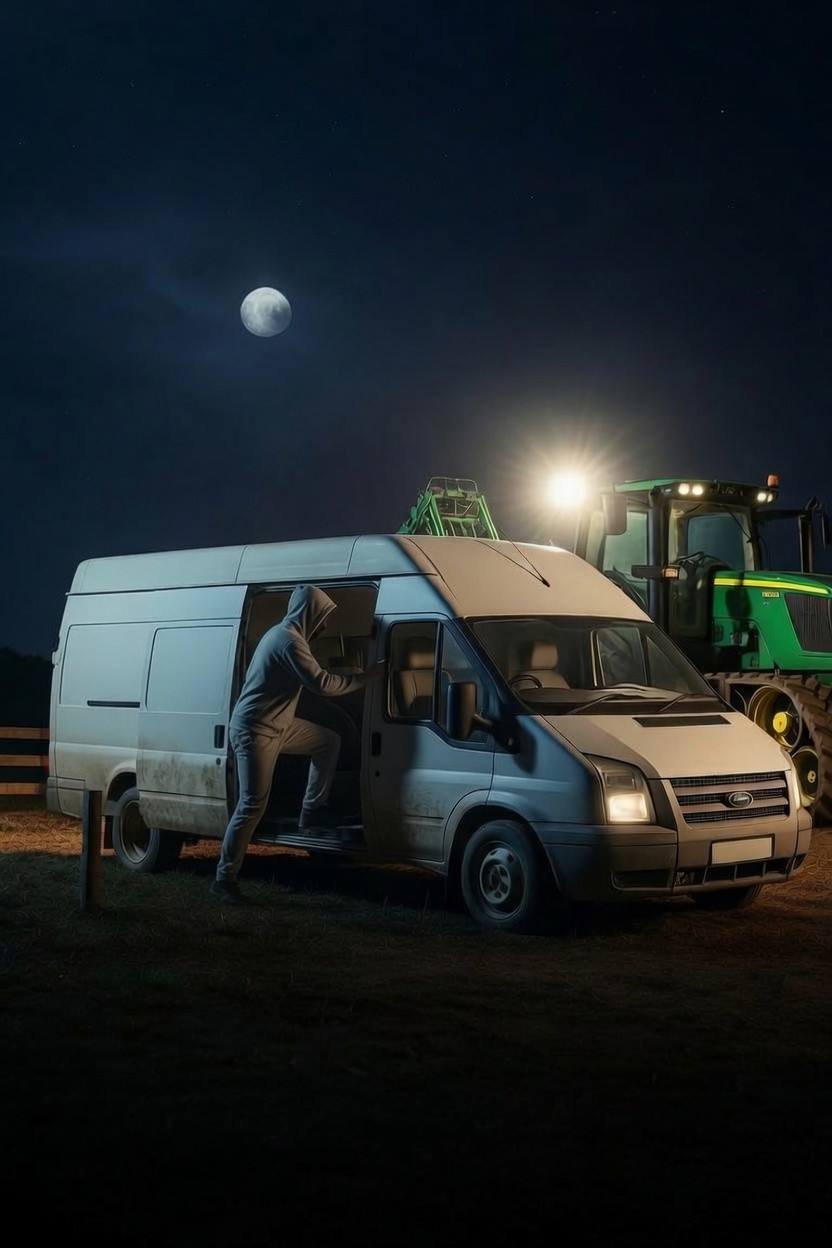
The best place to live in the UK depends on balancing isolation, infrastructure access, property vulnerability, and your tolerance for distance from services. Rural communities offer space and privacy but introduce security challenges — livestock theft, unauthorised access, and equipment loss — that urban and suburban areas do not face equally. Understanding these trade-offs helps you choose a location that matches both your lifestyle and your ability to protect what matters.
Why rural location affects your security needs differently
Rural properties face distinct security pressures. Farmland and isolated dwellings are targets for organised theft of agricultural equipment, fuel, and livestock. Response times from emergency services stretch longer. Perimeter security becomes essential rather than optional, because neighbours are further away and natural surveillance is minimal. Urban and suburban residents rely partly on population density and CCTV coverage; rural residents cannot.
These differences aren’t theoretical. Agricultural theft costs UK farmers and rural property owners significantly each year. The distance between properties means a breach on your land may go unnoticed for hours. Choosing a rural location without understanding these patterns leaves you underprotected. Conversely, understanding the vulnerability profile helps you select a rural area where you can realistically secure your boundaries, monitor your perimeter, and integrate security into your property management from the start.
What makes a rural area lower-risk for security breaches?
Lower-risk rural locations share common traits: established communities with active neighbourhood watch or farmer watch schemes; regular local police patrols; established farm networks that share intelligence on theft patterns; reasonable proximity to towns (15–30 minutes) for emergency response; and properties with natural or existing perimeter definition. Areas where rural residents know one another tend to have better informal surveillance and faster reporting of suspicious activity.
Infrastructure also signals security viability. Reliable mobile signal and broadband allow you to install remote monitoring systems that actually function. Roads with regular traffic create natural witnesses. Proximity to a market town or village provides access to local security installers and agricultural specialists who understand rural-specific threats. Isolated areas with poor connectivity and sparse traffic offer privacy but make real-time security monitoring and emergency response substantially harder. A genuinely secure rural location isn’t remote by accident — it’s remote with deliberate infrastructure and community support in place.
How do you assess security feasibility before committing to a location?
Before choosing a rural property or area, visit at different times of day and in different weather. Assess the perimeter: can you define it clearly with fencing or natural boundaries? Identify sight lines from your main dwelling to outbuildings and boundaries. Check mobile signal strength and broadband availability directly — not the provider’s optimistic coverage map. Ask the current owner or agent about theft history in the area, police response times, and which neighbours have security systems. Visit the local pub or shop and ask farmers directly about their experiences.
Contact local police non-emergency numbers and ask about crime patterns in the postcode. Research whether the area has an active farm watch or rural crime partnership. These steps take time but prevent expensive regrets. A property in an area with poor mobile signal, no neighbour proximity, weak community networks, and historical theft problems will require security infrastructure so expensive and complex that you may be better served moving to a location where basic conditions support protection naturally.
What trade-offs come with choosing very remote rural locations?
Very remote properties — those more than 45 minutes from the nearest town, with poor mobile signal, or without established neighbouring communities — offer genuine privacy and space. They also create operational costs that many buyers underestimate. Emergency response times exceed an hour. Security monitoring relies entirely on systems you install and maintain yourself, with no backup from local presence. Any system failure or alarm false alarm means you manage the response alone. Utilities, broadband, and maintenance support become harder to access. Supply chains for repairs and upgrades lengthen.
These locations suit buyers with specific tolerances: those with technical skill in system maintenance, experience managing remote properties, financial capacity to install comprehensive security infrastructure upfront, and genuine preference for isolation over convenience. For most buyers considering rural living for the first time, a location within 20–30 minutes of a market town with established neighbouring farms and reasonable broadband offers a more sustainable balance between privacy and practicality.
Which UK regions balance rural character with realistic security conditions?
Established farming regions with strong community networks tend to offer the best balance. Areas of the Cotswolds, the Welsh Marches, parts of Cheshire and Shropshire, and East Anglia host long-established rural communities with active farm watch networks, good police liaison, and neighbouring properties close enough for informal mutual awareness. These regions have sufficient population density to support reliable broadband and mobile signal, yet maintain genuine rural character and agricultural scale. Properties are often within 15–25 minutes of substantial villages or market towns.
Remote Scottish Highlands, the Lake District, and moorland areas in Devon and Cornwall offer dramatic isolation but require buyers to accept extended emergency response times and higher infrastructure costs. Peri-urban areas immediately beyond major cities (within the green belt or just beyond) offer security advantages of proximity and quick response, but sacrifice rural character and often impose tighter planning restrictions. The ‘sweet spot’ for most buyers lies in agricultural regions with established settlement patterns, not in the most dramatic or most accessible locations.
How should you factor security planning into your location decision?
Choose a location only after you understand the security infrastructure it requires. Visit the property in daylight and darkness. Walk the boundaries. Ask the seller or agent directly what security measures exist and why. Request crime reports for the postcode from local police. If the answer to ‘why isn’t there a fence?’ is ‘it’s not needed’, that’s a sign of genuine community. If it’s ‘because it wouldn’t make a difference’, that’s a warning.
Budget for security as part of your location choice, not as an afterthought. A rural property without fencing, gates, or monitoring in a low-surveillance area will demand expensive technology to achieve the security that a property in a tighter-knit farming community achieves partly through presence and awareness. The best rural location isn’t the most isolated or the cheapest — it’s the one where geography, community, and infrastructure combine so that security is realistic to maintain over time.