
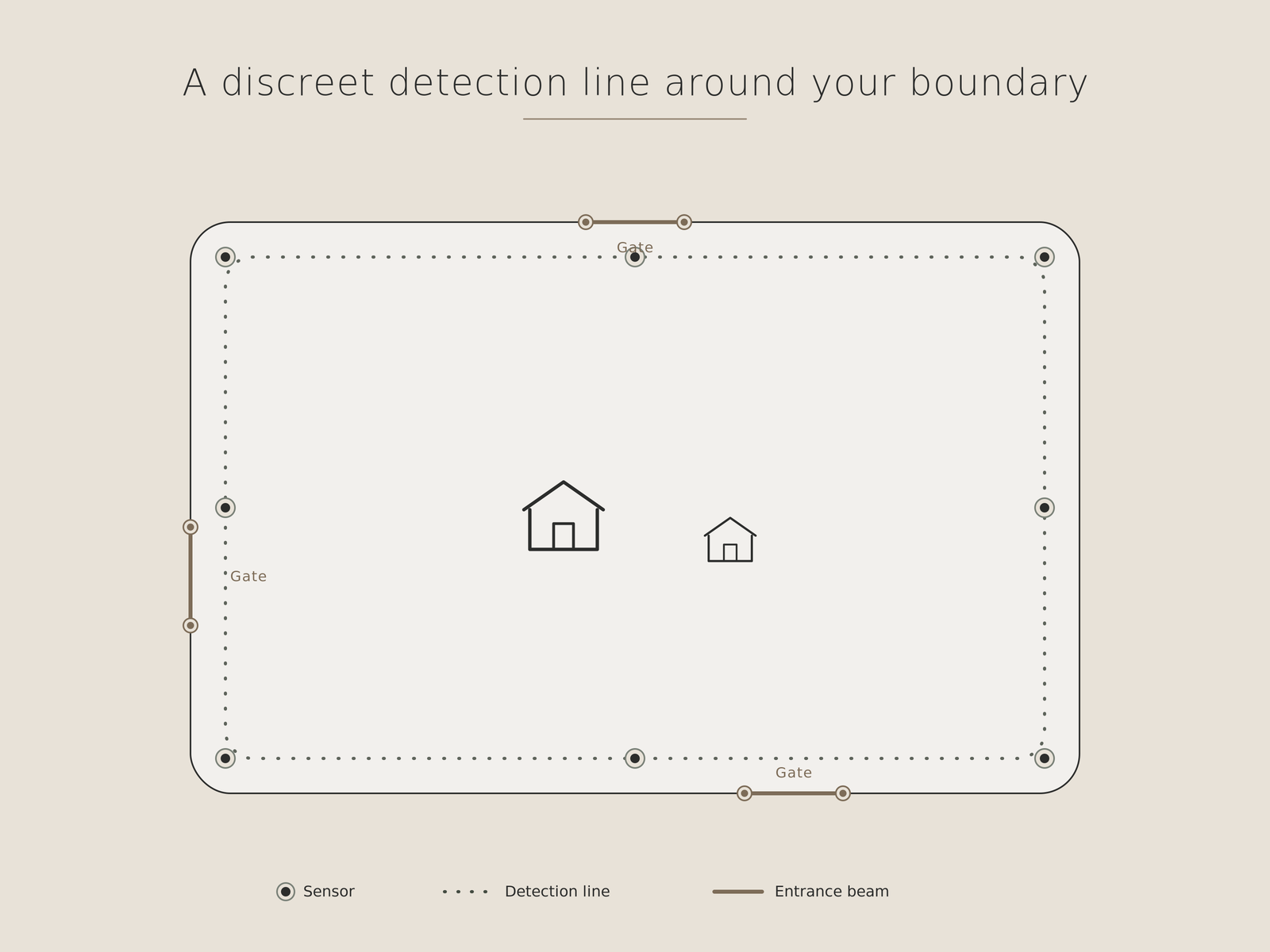
Alarm sirens deter intruders by creating high-decibel noise that alerts occupants and neighbours when a security system is triggered. On farms and rural properties, they work alongside detection devices—sensors, cameras, keypads—to form a complete deterrent and response system. The right siren depends on your site’s layout, local regulations, and whether you need internal, external or both.
What does an alarm siren actually do in a rural security system?
An alarm siren serves two critical functions in farm and rural security. First, it acts as an active deterrent: when triggered, the loud noise signals to a potential intruder that the property is protected and help is being alerted. This audible response often causes intruders to abandon an intrusion attempt before damage or theft occurs. Second, it alerts occupants and nearby neighbours that something is wrong, creating a human response layer that complements electronic monitoring.
Sirens are triggered by the control panel when a sensor (door contact, motion detector, or glass-break sensor) detects an intrusion. The alarm system logic determines whether to trigger immediately or after a brief delay—allowing occupants to disarm the system if the activation was accidental. On rural properties where police response times are longer and neighbours are sometimes the first witnesses, an audible alarm becomes especially valuable; it mobilises the people already present on or near the land.
What are the main types of alarm sirens for farms and rural properties?
Internal sirens are mounted inside the property—usually in hallways, utility rooms or near the control panel. They alert occupants immediately and are typically 85–100 decibels. Internal sirens are less weather-exposed than external units, require no planning considerations, and work well for properties where occupants are usually present. They are often the starting point for smaller farm buildings or rural homes.
External sirens are mounted on the exterior wall, roof or a separate pole, typically 95–110 decibels, with weatherproof housing to resist rain, frost and UV. They alert neighbours and passing workers, creating a wider deterrent zone. External sirens require weatherproof enclosures (usually plastic or metal), may require planning approval depending on size and location, and need mains or backup battery power. On farms with multiple buildings, workers in fields, or where neighbours are within earshot, external sirens significantly increase the chance that an intrusion is witnessed and reported.
Dual-function systems combine an internal sounder with an external siren, triggered simultaneously or in sequence. This layered approach ensures immediate internal awareness while broadcasting the alarm across the wider farm or rural landscape. Some systems allow the control panel to trigger internal and external alarms independently—for instance, sounding only the internal siren for a false-alarm risk, or both for high-confidence threats.
Where should sirens be positioned on a farm or rural site?
Placement directly affects the siren’s effectiveness. External sirens should be mounted high (roof level, 2–3 metres minimum) to maximise acoustic spread and minimise vandalism risk. Position them so that the sound projects away from main farm entrances, towards areas where neighbours or passing traffic can hear. Avoid mounting directly above doors or windows where they can be easily reached. On larger farms, multiple external sirens—one per building or boundary area—ensure no section of the property goes unheard.
Internal sirens work best near the control panel or in a central hallway where sound carries through the building. Avoid enclosed utility cupboards or back rooms; the siren must be loud enough to wake occupants from sleep or alert them in noisy farm environments (near machinery sheds or livestock areas). On properties with deaf or hard-of-hearing residents, visual alarm devices (flashing beacons or light strobes) can accompany audible sirens to ensure awareness.
Rural properties often have scattered buildings, outhouses, or livestock areas. A single siren may not cover the entire footprint. Conduct a site walk-through to identify where workers spend time and where neighbours’ homes or farm lanes are located. Position external sirens to reach those zones. On properties with long driveways or fields, consider whether a siren audible at the farmhouse will also reach storage buildings or pasture entrances where night-time theft is a concern.
What regulations affect alarm sirens on rural properties?
Noise regulations vary by local authority. Many areas in England and Scotland permit sirens up to 97–100 decibels without notification, but some councils cap external alarms at 92 decibels or require planning permission for visible alarm boxes. Rural properties in conservation areas or AONB (Area of Outstanding Natural Beauty) zones may face stricter design or noise controls. Contact your local authority or planning office before installing external sirens; they can advise on decibel limits and whether a visible alarm box requires permission.
Building regulations rarely restrict sirens themselves, but electrical installation must comply with BS 7909 (temporary and portable electrical installations) or BS 5839 (fire alarm systems) standards depending on system classification. If the alarm system includes fire detection, the siren may also need to meet BS 5839 acoustic requirements. A competent installer will ensure that mains power, battery backup and wiring all meet current standards.
Some insurance policies require alarms to be certified or professionally monitored. Check your farm or rural property insurance documents to see whether a siren alone satisfies cover requirements, or whether the system must be monitored by a 24/7 control centre. This may influence whether you choose a standalone siren or integrate it into a monitored alarm system.
How do sirens integrate with other detection devices?
A siren is the alarm system’s announcement layer; it only sounds when detection devices (door contacts, motion sensors, window sensors, glass-break detectors) trigger the control panel. A farm security system typically combines perimeter detection (door and window contacts on buildings, magnetic sensors on gates), motion detection (for internal spaces or outdoor yards where livestock don’t roam), and sometimes CCTV to capture footage alongside the alarm. The control panel logic chains these sensors together: if a door contact senses forced entry, the control panel triggers the siren and (if monitored) alerts a control centre.
On rural properties, motion sensors protect large areas cost-effectively—a single outdoor PIR detector can cover a farmyard or storage area. If that sensor activates outside business hours, the control panel can trigger the siren instantly and notify the monitoring centre. Conversely, during daytime when workers are moving around, the same sensor might be bypassed or set to a longer delay to avoid false alarms. Sirens amplify the effectiveness of detection by making the response audible and immediate; without a siren, an intruder might not know they’ve been detected.
What should you consider before choosing or upgrading a siren?
Start with a site survey. Walk your property and identify buildings, boundaries, neighbour locations, and areas where theft or intrusion risk is highest. Measure distances; a siren audible at 50 metres may not reach a field 200 metres away. Assess whether internal occupancy is constant or intermittent—if the farmhouse is often empty, an external siren becomes more critical because there may be no one inside to hear an internal alarm. Note any weather exposure: coastal farms, exposed hilltops, or areas with heavy snow require heavily weatherproofed external enclosures.
Consider your detection strategy. If you rely on motion sensors in open farmyards, an external siren is essential because motion detection may trigger at night when nobody is awake inside. If you focus on perimeter entry points (doors, gates, window contacts), internal detection combined with an internal siren may be sufficient for occupied properties. Talk to your installer about which siren type (internal, external, or both) matches your detection layout and your daytime/nighttime occupancy patterns.
Check local regulations before specifying a siren. A 110-decibel external siren may be ideal technically but illegal in your area. An installer familiar with your council’s noise and planning rules can recommend compliant alternatives. Finally, budget for power and backup: external sirens demand weatherproof enclosures and either mains power with battery backup or dedicated solar battery systems. Internal sirens have lower installation cost but less perimeter reach on large farms.