
A SIM card lets a farm security camera send alerts and footage to you in real time, over a mobile network. Without it, a camera is only a recorder that stores video locally on a hard drive or SD card. On a farm or rural holding where broadband is weak or patchy, a SIM card makes the camera work independently of fixed infrastructure, so you get a warning the moment an intrusion happens, not when you happen to check the footage hours or days later.
What a SIM card does in a farm security camera
A SIM card in a security camera is a mobile network connection. It works the same way as a SIM in a phone: it carries data over a signal mast, and the camera uses that connection to send you alerts, live video, and recordings. The moment the camera detects motion, it can send a message to your phone saying so, and often a still image of what triggered it. You get that alert in seconds, not when you remember to log in and check.
Without a SIM, a camera records to a local storage device, a hard drive, an SD card, or a memory stick. You own the footage, but you do not know an intrusion has happened until you go to the camera and watch the recording, or until you review the footage at the end of the night. By then, the intruder is long gone. On a farm spread across several fields or yards, checking every camera every hour is not practical, and most farmers do not do it.
The SIM card solves this lag. It makes the camera active, not passive. You are told the moment something moves in front of it.
Why SIM cards matter more on rural holdings than in towns
In a suburban street or a business park, a security camera can use fixed broadband, a fibre line or a leased internet connection wired to the building. That works well when the infrastructure is there. On a working farm, the broadband signal often weakens as you move away from the main building, and in many parts of the UK the mobile network is patchy or absent in the fields and the far yards.
A standard GSM alarm or a camera that relies on your home internet will go silent when the signal drops. You lose the alert, the recording, and any warning at all. An intruder can work at night without you knowing anything has happened until morning. By contrast, a camera with its own SIM card is independent. It carries its own mobile connection in the device itself, so it sends alerts as long as any mobile signal exists at that location. In the black spots where standard alarms fail, it keeps working.
The cost of not knowing an intrusion is happening
A farm or rural holding that relies on fixed broadband or standard monitored alarms loses time when the signal fails. While you wait for the connection to come back, or while you are asleep and the alarm box is silent because it has no way to reach you, an intruder has hours to work. Livestock can be loaded, gates can be cut, fuel and machinery can be moved. The longer the gap between the intrusion and your response, the further away the theft is by the time you know it happened.
Recovery rates improve sharply when you have a real-time alert and an accurate record of what the intruder looked like and what they took. Police can act on a lead that is minutes old and a clear image far more effectively than on a report that comes in the morning. A camera that sends you an alert in real time, with a photo, is the difference between a stolen quad that is gone for good and a stolen quad that is found because you called in the number plate within the first hour. Without that speed, most rural thefts recover as nothing.
How KangalGuard cameras use SIM cards to work in the places where standard systems fail
KangalGuard is an off-grid, mobile-network-independent farm security system built for the rural holdings where organised gangs work at night. Each camera carries its own SIM card and sends alerts, footage, and recovery leads to you the moment an intrusion is detected, whether your broadband is working or not. The camera does not depend on a monitored service, a cloud account, or a subscription to a mobile operator. You own the system outright. You get the alert, you own the footage, and you get the leads the police can act on, without a mandatory contract or a monthly bill.
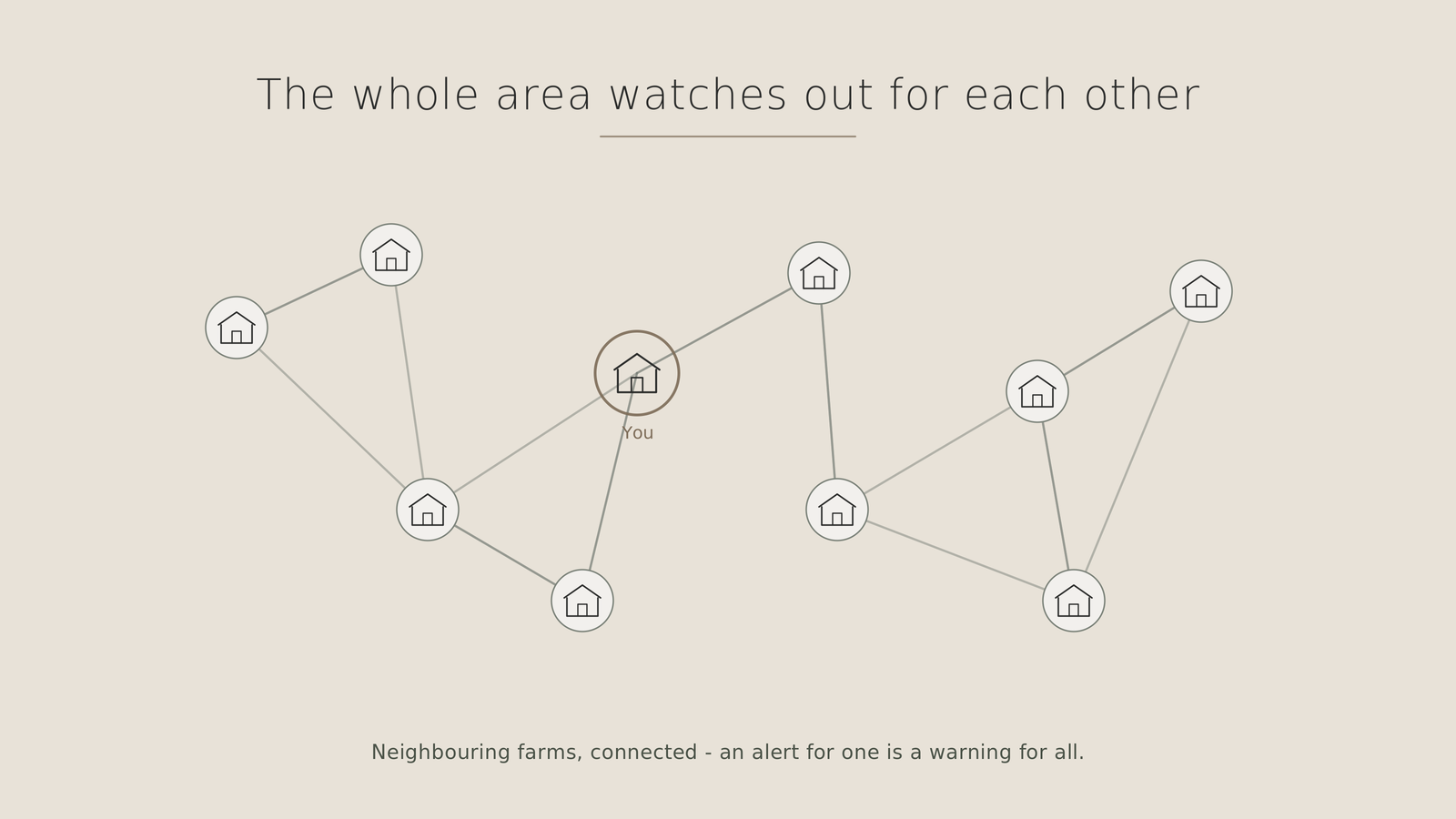
Because KangalGuard works independently of fixed infrastructure, it catches intruders at the perimeter, deters them on the spot with visible deterrence, identifies them, and turns the incident into recovery intelligence. The system has been designed for the multi-generational farmer protecting livestock and yards, the estate manager running several sites, the arable operator carrying high-value kit, and the smallholder on a tight budget. It works for the farmer in the rural-crime network who wants to warn the whole district, not just his own gate.
What moves the SIM card choice for a farm security system
The choice of SIM card matters less than the choice of camera and system. A standard monitored alarm service will give you a SIM card, but it locks you into a monthly contract and a cloud platform you do not control. An off-grid system gives you the SIM card as part of a camera you own, with no cloud lock-in, no subscription, and no dependency on the monitoring company staying in business. You decide what to do with the alert and the footage. You decide whether to call the police, warn your neighbours, or take another action. The SIM card is a tool; the system it sits in determines whether it serves you or ties you to a service provider.
What matters is real-time alert, independent operation, and ownership. A SIM card gives you the alert. An owned system gives you the independence and the control.