
A PIR sensor alarm detects body heat and movement within its range, then triggers an alert. On farms, standard PIR alarms fail because they rely on mobile-network signals to send alerts from remote sites where coverage drops to nothing. A sensor that cannot phone home when it detects an intruder is not a security system; it is a trip wire that nobody knows about.
What a PIR sensor actually does
PIR stands for passive infrared. The sensor reads heat signatures moving across its field of view. When motion reaches the threshold you set, the sensor triggers an alarm signal. That signal then needs a pathway to reach you: usually a mobile network connection, a landline, or a hardwired connection to a monitoring station.
On a farm, that pathway is the problem. Rural holdings often sit in mobile black spots where standard GSM networks do not reach. A PIR sensor in a yard outbuilding, a livestock pen or a field gate can detect an intruder perfectly well. But if there is no mobile signal, the alarm cannot phone the monitoring centre or send you a message. The intruder leaves undetected and unrecorded.
Why standard PIR alarms fail on farms
You buy a PIR alarm system because you want to know when someone is on your land. Most farm security comes down to one brutal fact: if the alarm cannot reach you when it triggers, you have paid for a sensor that nobody benefits from. A monitored system demands a mobile signal or a landline, and both disappear in the rural areas where organised gangs work.
Cost matters too. Monitored PIR systems charge monthly for the call-out and the response service. You are tied to a contract, you own nothing, and if you move the system to another site you often need to renegotiate. A sensor that costs you a standing charge every month is an ongoing bill, not a one-off investment in your own perimeter.
The real problem: you cannot act on an alert you never receive
A PIR alarm only protects you if the alert reaches you and you can act on it. In the mobile black spots where most rural break-ins happen, that reach is broken. You lose the alert. You lose the time window. You lose the chance to call the police while the intruder is still on your land.
Even when the signal works, a monitored system sends the alert to a call centre operator first. You wait for them to call you and confirm what the sensor saw. By then, twenty minutes have passed. The intruder has loaded kit or livestock into a vehicle and left. The police need an address and a description fast; instead they get a call about an alarm that may or may not still be active.
How off-grid systems solve what PIR sensors cannot
An off-grid alarm system uses the same PIR sensor technology but removes the dependency on mobile networks. Instead of sending an alert through GSM, the system stores the detection and records what the sensor saw. When a network connection becomes available, the data syncs automatically. You own the system outright. You keep working in areas where ordinary alarms go dead.
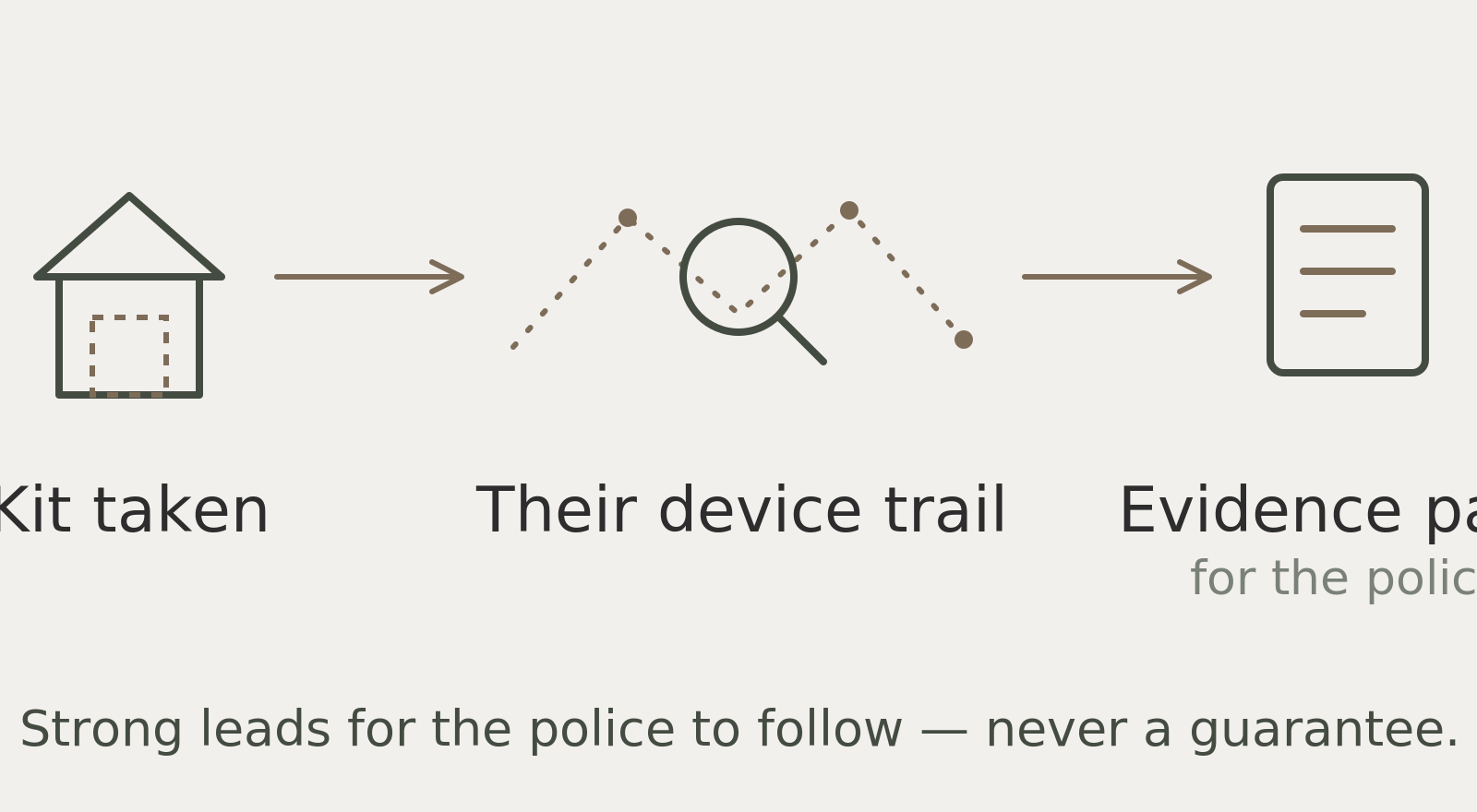
The recordings and detection logs become recovery intelligence. Instead of waiting for a call-centre confirmation, you have video, a timestamp, and a location. You hand that to the police and they have what they actually need to respond and investigate. A system built for rural areas catches the intruder at the perimeter, records the incident, and gives law enforcement something real to work with.
When a PIR alarm makes sense and when it does not
A basic PIR alarm works for sites with strong mobile coverage and a willingness to pay a monitoring charge. If your farm sits near a town, a signal reaches you reliably, and you want someone else to hold the response responsibility, a monitored system may suit you.
A PIR alarm does not work if you are in a rural black spot, if you want to own your own system and avoid monthly contracts, or if you need recovery evidence the police can actually use. In those cases, an off-grid system using motion sensors and local recording is the alternative that works where the infrastructure does not.
What to do now: protect your farm perimeter
If you have land in a mobile black spot and want a system that works without a monthly bill or a network signal, tell us what needs watching over. We build systems that record incidents on-site and sync when coverage returns. You own the hardware. You own the recovery intelligence. The police get the leads they need.
Most farms in our network chose off-grid systems precisely because standard PIR alarms left them blind. Start by describing your site and your current gaps.